
Tactics
Drop Shotting for Bass: A Finesse Rig Worth Learning
September 1, 2026 •iSportsman Staff
June 3, 2026
iSportsman Staff
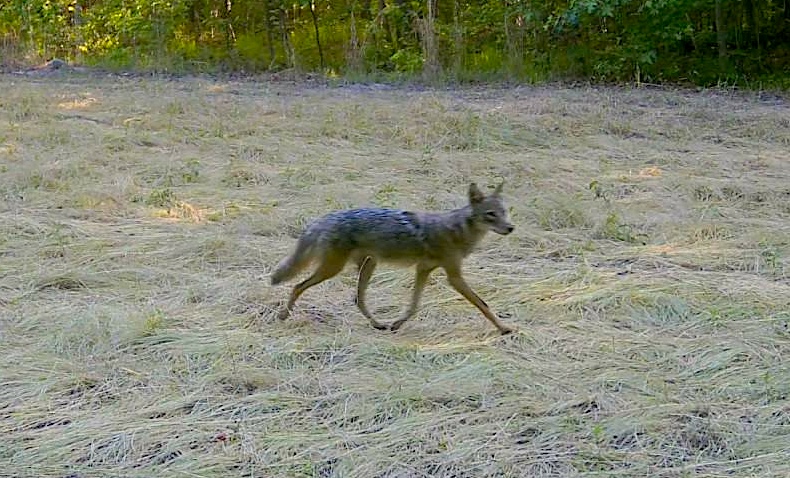
Predators live and die by their noses. That isn’t news to anybody who has ever watched a coyote hang up, cut a half circle downwind and disappear like somebody yanked him offstage with a rope. It is not news to a bear hunter who has sat over bait for five evenings while trail-camera photos show the big boar coming in only after dark. And it is sure not news in the warm months, when you are sweating through your shirt before you even reach your setup.
Warm weather changes the game. You sweat more. Your boots carry more odor. Your pack, hat, facemask and truck seat all collect scent. Then the breeze takes every bit of it and sends it rolling through the same draws, field edges, creek bottoms and timber fingers where predators are already trying to sort out what is real and what is trouble.
The wind can beat you before you ever make the first call. Or, if you pay attention, it can help you kill predators that never know you’re there.
Predator hunters will argue scent control until the campfire burns down to ash. Some believe no spray, soap, detergent or carbon-lined garment is going to fool a coyote’s nose. Others won’t walk out the door without washing their clothes, spraying their boots and showering in scent-control soap.
The truth is probably somewhere in the middle.
You are not going to make yourself scent free. Not in July. Not after walking across a hayfield with a rifle, call, sticks, pack, water bottle and sweat running down your back. But that does not mean you should ignore scent either. Go all in or do not waste your time.
Air your clothes out. Wash them in scent-control detergent. Spray your boots, pack, facemask, gloves and hat. Use scent-control soap before the hunt. Keep your hunting clothes away from gas, food, dogs, smoke and the inside of a truck that smells like coffee, fast food and three days of life. An air tight, scent-free bag for hunting clothes is the ticket.
None of this makes you invisible. It just reduces the size and strength of the scent trail you are leaving behind. And that matters.
A hard wind is easy. You can feel it. You can see grass bend, leaves roll and dust move across a field. A light breeze is the one that ruins hunts.
That little puff of air you barely notice can carry your scent right into the lap of the animal you are trying to call. Worse, it may not be doing the same thing 200 yards away that it is doing where you are sitting.
Carry wind powder. A small squeeze bottle is cheap, light and worth its weight when the air seems still. Give it a puff and watch where the powder drifts. Check it when you leave the truck. Check it when you sit down. Check it again before you call. Then look farther out.
Use your binoculars to study grass tops, weeds, leaves, dust, cattails or anything else that moves. The breeze on your cheek may be sliding left to right, while the air out near the edge of the field is pulling the opposite way. Hills, creek bottoms, timber, cutovers and crop edges can twist wind in ways you will never feel from your seat.
That matters for scent. It can also matter for the travel of your bullet if you have a steady crosswind and a coyote hangs up at 250 yards and gives you one look before leaving.
The old rule is simple: keep the wind in your face. That is still a good rule. But predators do not read rulebooks. Coyotes especially like to circle. They often want to get downwind of the sound before committing. If you set up with the wind in your face and no plan for that circle, you may be beaten the moment the coyote does exactly what coyotes do.
Some successful hunters call with the wind at their back on purpose.
The idea is not that they want their scent blowing into coyotes. The idea is that a responding coyote will try to swing downwind, and the hunter plans to kill him before he reaches the scent cone. This can work, but it comes with a catch. Those coyotes may make that swing at 300 or 400 yards. Sometimes farther.
If you hunt that way, you need to be able to shoot that far. That means knowing your rifle, your load, your dope, your wind hold and your own limits. A coyote trotting across a sidehill at 350 yards in a switching breeze is not the place to discover you were better on the bench than you are in the field.
For most hunters, a crosswind is a better answer.
Set up with the wind hitting one ear instead of your nose or back. Put the call where it forces an approaching predator to expose itself before it can get directly downwind. Watch the downwind side like your hunt depends on it, because it does.
A crosswind setup gives you a chance to catch coyotes as they begin their circle. Often, that shot comes well inside 200 yards instead of way out on the far edge of the property. Think about the approach. Think about what the predator wants to do. Then sit where you can see that move happen. The call pulls them. The wind tells them where to go. Your setup should cover the place where those two things meet.
Deer hunters figured this out a long time ago. Height helps. A tree stand gives a better view, but it also helps lift human scent off the ground. That does not mean your scent disappears. It means the wind has a better chance of carrying it above the animal’s nose or breaking it apart before it settles where it can hurt you.
Predator hunters can use the same idea.
Sit on a hillside. Use a high bank, terrace, ridge, rock outcrop or elevated field edge. Get above the ground when the terrain gives you the chance. Even a little height can help you see more, move less and keep your scent from pooling right where a predator is likely to travel.
In warm weather, this is even more important. Hot air, thermals and terrain can carry scent in strange ways, especially early and late in the day. Pay attention to how the air moves as the sun rises, as shade settles and as low spots start to cool.
The best-looking setup is not always the best setup. The best setup is the one where the wind works with you.
Coyotes will bust you and vanish. A bear may simply change his schedule.
Bear hunters who hunt over bait know this well. A good bear may hit the bait in the dark every night and never show himself during legal shooting hours. There are several reasons that can happen, but human scent is always near the top of the list.
Approach matters. Do not walk past the bait. Do not spread scent all over the site. Come in from the side away from the barrel or bait pile whenever possible. Keep your route clean. Step where you need to step and get in the stand without wandering around like you are checking fence.
Distance helps, too. A rifle hunter sitting 75 yards from bait has more room for scent to thin out than a bowhunter tucked in tight at 20 or 25 yards. That does not mean distance solves everything. It just gives you a little more margin.
Some bear guides even leave a piece of a hunter’s clothing in the stand overnight when bears are only showing after dark. The idea is to let bears smell the human odor when the hunter is gone so they begin to accept it as part of the site. It’s not foolproof. Nothing with bears ever is. But sometimes a bear that gets used to faint human odor at night is more willing to slip in during daylight.
Again, you are not fooling the nose. You are managing the risk.
Predators still use the wind at night, but many hunters who spend serious time behind thermal or night vision will tell you the rules can feel different after dark. Coyotes will likely still circle. They will probably try to get downwind. But they also seem more willing to come through scent that would stop them cold in daylight.
Do not take that as permission to get lazy. The wind still matters as does your setup. But at night, visibility, approach, pressure, sound and confidence can sometimes weigh differently. A coyote that would lock up at 300 yards in broad daylight may come charging through the same scent stream under cover of darkness. Take advantage of it, but do not count on it.
Bad wind does not ruin every hunt. Ignoring it does.
Predator hunting is a game of edges. A little less scent. A cleaner approach. A better seat. A crosswind instead of a straight downwind blowout. A hillside instead of a flat spot. Watching the downwind side instead of staring at the call. Those things add up.
In warm months, when sweat and heat make scent control tougher, wind discipline matters even more. You may not beat a predator’s nose every time. In fact, you will not. But you can keep from handing him the hunt before it starts.
Use the wind. Plan for the circle. Watch the downwind side. Then be ready when the animal shows up right where the wind said it would.
June 1, 2026 •John N. Felsher