Tactics
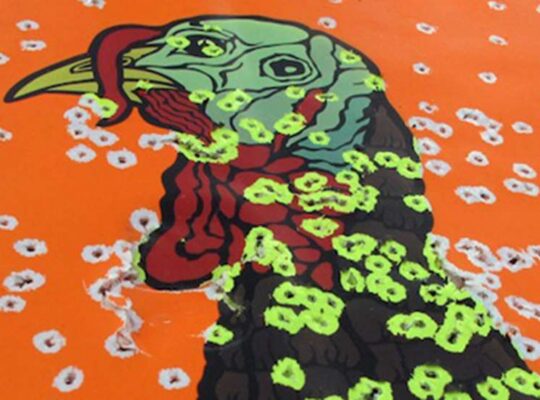
The Importance of Patterning Your Turkey Gun
March 18, 2026 •Doug Howlett
January 30, 2026
John N. Felsher
Few lures can match the versatility of spinnerbaits, but few anglers fish these old, reliable lures to their fullest potential.
Most people simply reel spinnerbaits steadily. They might slow-roll spinners over the bottom, buzz them across the surface or wake them just under the surface. However, small fish fleeing for their lives from predators don’t swim in a straight line. They dart, weave and hide.
“An erratic presentation is what catches bass, period,” emphasized Kevin VanDam, a four-time Bassmaster Classic champion from Kalamazoo, Mich. “I don’t just cast it out and burn it back. I jerk it, twist it and make it run erratically. Make the blades flare, the bait jump and the skirt pulse. I want to tantalize bass into thinking that something is wrong with a baitfish.”
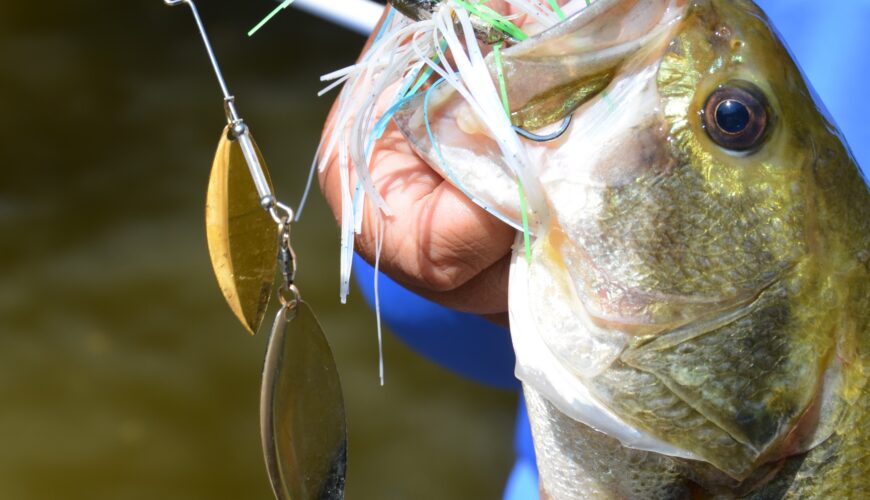
More rounded Colorado blades sink faster, making them better for fishing deep water. Colorados also create more vibrations, good for fishing in dingy conditions. Streamlined willow-leaf blades create more lift and cut through grass better, making them popular for fishing shallow weeds. They also generate more flash for when bass chase shad.
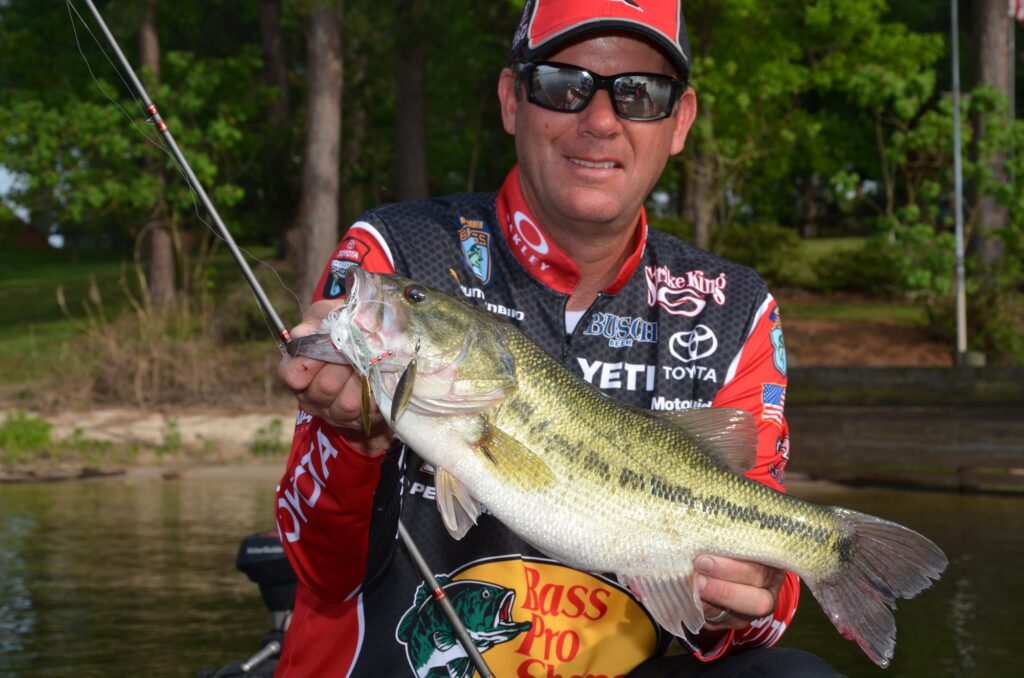
Kevin VanDam, a four-time Bassmaster Classic champion from Kalamazoo, Mich., shows off a bass he caught on a spinnerbait while fishing at Toledo Bend Reservoir. John N. Felsher Photo
Since blades create lift, spinnerbaits inherently rise in the water when retrieved. Therefore, most people consider them shallow-water lures for fishing around logjams, fallen trees, stumps, rock piles, riprap and other visible cover. Many anglers just fish the periphery, but lunker largemouths hide in thick cover waiting to ambush anything then can. The bigger the bass, the thicker they like it. To reach the big ones, probe every bit of cover.
“An experienced angler can look at a spot and consider cover, shade, current, depth and other factors to figure out where a bass should be,” VanDam noted. “Sometimes when fish aren’t feeding aggressively, we might throw numerous times to one spot that looks like it should hold a bass.”
When passing a stick or other object, shake the rod tip. Pause a moment to flare the skirt. Smack baits into logs, stumps and other hard objects. The wires on “safety-pin” spinnerbaits help deflect objects, allowing the lures to slip through entanglements. Occasionally pause so the bait sinks a bit with the blades turning and flashing.
“Bang the bait off every limb and stump,” VanDam recommended. “Hit cover from several different angles until you finally tick one off enough to bite. Sometimes it takes multiple casts to really work a bait intensely before a fish bites. Around isolated cover, make multiple casts from several different directions.”
Wires can’t deflect off vegetation. Around grass, many anglers throw streamlined in-line spinners. Others work safety-pin spinners through seams in broken vegetation. Keep the lure just below the surface to provoke vicious reaction strikes.
“When fishing scattered grass on a river channel edge, I’ll throw a spinnerbait and let it fall down in the grass,” explained Gerald Swindle, a professional bass angler from Guntersville, Ala. “I lower my rod tip to about 8 o’clock. Then, I rip the rod tip up to about 11 o’clock and let the bait fall back down into the grass to trigger a reaction strike. Once the bait starts falling, the blades tinkle together to make a little noise. When it hits bottom, I rip it back up out again. That’s a great way to trigger strikes and catch bigger fish.”
During temperature extremes, bass frequently go deep and don’t want to chase baits. Slow-rolling spinnerbaits parallel to drop-offs or along bottom contours can prove highly effective in deeper water.
“Most people work a spinnerbait too fast, especially in the pre-spawn period,” commended John Murray, a professional bass angler from Spring City, Tenn. “When I’m fishing cold water, I really want the blades to turn the slowest. I barely move the bait. In cold water, people cannot reel a spinnerbait too slowly. Just a little movement might work.”
Even when slow rolling, vary retrieves. Move the bait several feet with the rod, not the reel. Then, pause to reel up the slack as the bait slowly sinks with blades fluttering. Also try “yo-yoing” or “helicoptering” baits. Pop a bait off the bottom and let it sink. As the bait falls, blades continue spinning. Quite often, bass attack baits as they sink like dying baitfish.
“I like to use a spinnerbait like a jig on the bottom,” Murray said. “I use a 3/4-ounce bait and let it fall to the bottom. I’ll pull it up 18 to 24 inches off the bottom so the blades start turning and then ‘kill’ it. On a steep bank, I follow the bottom contours as it sinks with controlled slack so I can keep in contact with the bait. It works like a jig, but gives fish a different look with more bulk and movement to it. I’ve worked a spinnerbait down to 30 or 40 feet deep. When fishing deep, I fish a black spinnerbait and a white trailer. At that depth, color doesn’t matter. It’s the movement that triggers strikes.”
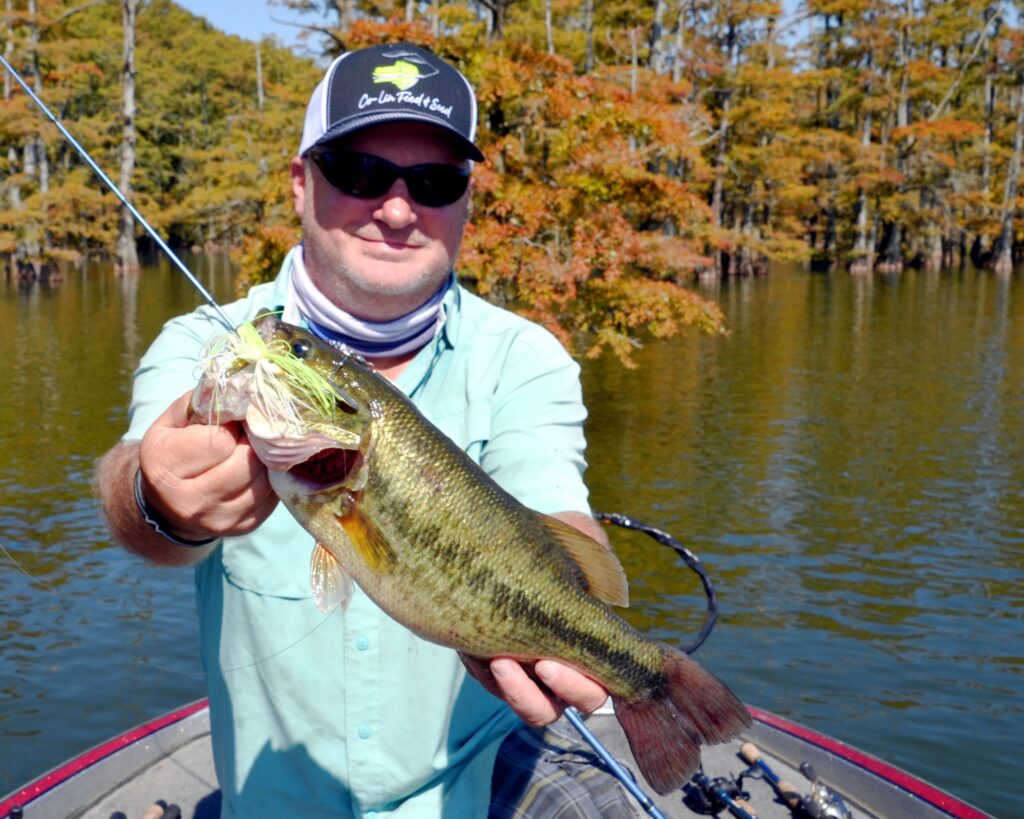
Gene Bishop, a Bassmaster Classic veteran and guide from Madison, Miss., shows off a bass he caught on a spinnerbait while fishing around cypress trees on Lake Washington. John N. Felsher Photo
Since spinnerbaits can tempt bass from top to bottom, they make particularly effective lures for fishing vertical cover such as standing timber, bulkheads and bridge or dock pilings. These objects give bass superb cover throughout the entire water column. Fish commonly suspend higher in the water and hover close to vertical objects.
Many anglers use white, chartreuse or some combination. Black spinnerbaits work well at night or in muddy conditions because they give off excellent silhouettes. Red spinnerbaits work in early spring when bass feed heavily upon crawfish. Natural shad patterns tempt bass feeding upon baitfish. Keep experimenting with colors and configurations.
“I usually throw white or white and chartreuse, but I also throw what I call a ‘soft’ shad color,” Swindle revealed. “It’s like a subtle smoking green or blue shad, but not so bright in the water. I fish white and chartreuse in stained water because I want to throw off more flair or contrast in the water. In clear water, stick with natural, soft shad colors.”
Also try different blade colors and configurations. Most anglers stick with silver, nickel, gold or some combination, but colored blades can work in different situations. In general, use brighter, more reflective colors during sunny conditions. On cloudy days and low-light conditions, gold reflects better in the water. Match blade sizes, shapes and colors to the dominant forage that bass chase in that place at that time.
“The blades need to mimic what the fish are eating,” Murray explained. “When I’m fishing cold, muddy water, a spinnerbait is my number one tool. In those conditions, I’d start with a 1/2-ounce chartreuse and white spinnerbait with a gold Colorado blade in front and a silver willow-leaf behind it. I prefer a Colorado when fishing muddy, dingy water because I want more vibration. Sometimes, just switching to a different blade size makes a big difference to fish.”
Of course, anglers can catch bass by simply reeling in a spinnerbait, making it a great choice for children or novice anglers. To consistently put more fish in a livewell, add a little flair to the presentation.
 John N. Felsher is a professional writer, broadcaster, photographer, editor and consultant. An avid sportsman, he’s written more than 4,000 articles for more than 176 different magazines on a wide variety of outdoors topics. He also hosts an outdoors tips show for WAVH FM Talk 106.5 radio station in Mobile, Ala. Contact him at j.felsher@hotmail.com or through Facebook.
January 9, 2026 •Guest Contributor
December 17, 2025 •iSportsman Staff