News
Pitt Receiver Tyreek Robinson Lands a Big Bass — and a Trip to the Coach’s Office
August 20, 2026 •iSportsman Staff
June 5, 2026
Doug Howlett
Virginia turkey hunters, as well as several other early reporting states, enjoyed a strong 2026 spring turkey season that has left many hunters, young and old, with some great memories to carry with them through the summer.
The Virginia Department of Wildlife Resources reported hunters checked 24,105 turkeys during the 2026 spring gobbler season, a 17% jump over last year’s take. DWR credited much of that increase to near-perfect hunting weather, with fewer cold, rainy days to keep birds quiet or hunters at home. The agency noted that one-quarter of the entire season’s harvest came during opening weekend alone, when hunters killed 5,895 birds. According to DWR, 16,774 birds — nearly 70% of the total harvest — were taken in the first two weeks of the season.
That tracks with what most turkey hunters already know. When the weather cooperates, gobblers move, hunters stay longer and the woods get a lot more interesting. DWR Executive Director Ryan Brown said hunters “enjoyed another very productive year” and took advantage of favorable conditions, especially on weekends, according to the agency.
The harvest also showed that Virginia’s turkey woods remain strongest east of the Blue Ridge, where hunters killed 16,349 birds, or nearly 68% of the statewide total. West of the Blue Ridge accounted for 7,756 birds. Adult gobblers dominated the take, making up 90% of the harvest, while jakes accounted for 9%. Hunters also checked 70 bearded hens.
Private land continues to carry the load in Virginia turkey hunting. DWR reported 92% of the harvest came from private land, while public land produced 8%. National Forest lands made up most of the public-land harvest and accounted for roughly 5% of the total statewide kill, a 47% increase on National Forest lands from last year. Southampton led all counties with 679 birds, followed by Bedford with 663, Fauquier with 481, Halifax with 463 and Augusta with 461.
Virginia was not alone in posting strong spring numbers. Several other states have already released 2026 spring turkey harvest reports, and the early picture across much of the country looks encouraging.
For Virginia, the story is mostly good. Hunters had birds. They had weather. They had enough opening-weekend action to make a lot of missed sleep feel worthwhile. But DWR also offered the necessary caution. While the statewide harvest remains strong, some areas are falling below turkey population objectives. The agency said habitat work that improves nesting and brood success will be key to keeping Virginia’s turkey hunting strong.
There are concerns among turkey hunters across many areas of the country that turkey numbers are not what they used to be 10 or 20 years ago, with the usual culprits being blamed: habitat (always a key concern), weather, predators, high harvest limits and reduced nesting success (often blamed on either weather or predators). Even the practice of fanning or reaping, as the YouTubers like to call it now, has been blamed. It’s an effective, yet potentially dangerous strategy of turkey hunting in the spring. Anecdotally, I’ve talked to hunters in recent years in Missouri, South Carolina, Alabama, Georgia, Florida, Massachusetts, Connecticut, New York and even Virginia who all have concerns. One hunter I spoke to in Virginia just down the road from my farm said it was the worst season he had experienced in 30 years. Had I just hunted my farm near him, in Southampton County, the county that lead the harvest for the state this spring, I would have probably agreed. But at my other farm, just 25 minutes away, it felt like we were in birds virtually every hunt. I even set up on a gobbling bird the last day of the season before he flew down and was led away by at least four hens. Such is turkey hunting.
With all of the concerns about declining numbers, one key factor also deserves consideration: hunters. NWTF research has suggested turkey hunter numbers are actually down roughly 22 percent. Indeed, land access, in the form of finding a place to hunt, particularly on private land, is a serious challenge facing many hunters. But I don’t think the issue is too few hunters, it’s still an issue of too many for the land that is available. Take an early morning drive through turkey country the first weekend of the season and odds are you’re going to see trucks scatterred on farms all over where hunters have parked them to go hunt. Another theory I’ve discussed with some longtime turkey hunters and outdoor writers, and there seems to be some agreement, since turkey hunting began seeing a real swing in popularity in the 1980s and 90s, there is less mystery among sportsmen surrounding hunting the wild turkey.
To put it plainly, as a hunter nation, maybe we are simply better at killing turkeys than we used to be.
With so many websites (like this one), television shows, social media posts and yes, even some magazines that still cling to existence, we are certainly among the most informed generation of hunters who have ever walked fields and forests. When I first began work at NWTF as managing editor of Turkey Call magazine, there was still an air of mystery to hunting wild turkeys among many of our new members. The thrill, excitement and desire of spring turkey hunting is still there for a legion of old and new hunters alike, but that mystique has certainly faded. Either way, hunter involvement, access and support, or lack thereof, of conservation efforts, all need to be factored into any discussion on wild turkey numbers. But for now, at least in a number of states that have already reported, it seems like 2026 was a pretty decent season for most.
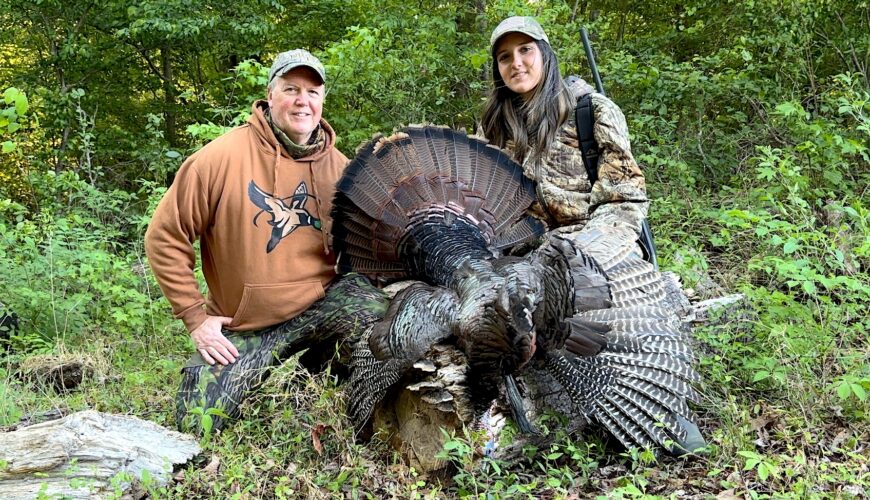
Lead photo: The author with his daughter, Zenna Howlett, and a Virginia gobbler she harvested after he called in three longboards off the roost this spring. (Doug Howlett Photo)
August 20, 2026 •iSportsman Staff
August 4, 2026 •iSportsman Staff