
News
Pitt Receiver Tyreek Robinson Lands a Big Bass — and a Trip to the Coach’s Office
August 20, 2026 •iSportsman Staff
August 4, 2026
iSportsman Staff
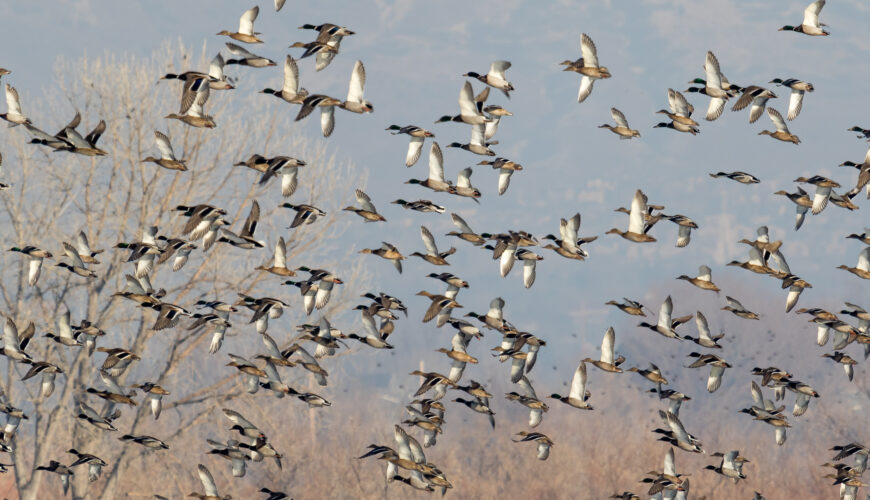
Every fall, duck hunters across America look to the skies and hope the northern breeding grounds produced another strong flight of birds.
Much of that production begins in the Prairie Pothole Region, a vast stretch of grasslands and shallow wetlands across the northern Great Plains that provides some of the most important waterfowl nesting habitat on the continent. Often called North America’s “Duck Factory,” the region helps sustain duck populations in every major flyway.
Now, waterfowl hunters and conservation organizations are warning that proposed changes to federal protections involving agricultural drain-tile systems could threaten some of those wetlands.
The U.S. Fish and Wildlife Service is reviewing the rules governing how close underground drainage systems can be installed to federally protected wetlands. If those protections are weakened, conservation groups fear wetlands could be drained indirectly, reducing the habitat ducks need to nest, feed and raise broods.
The public has until Aug. 7 to comment, giving hunters an opportunity to speak up before any changes are made.
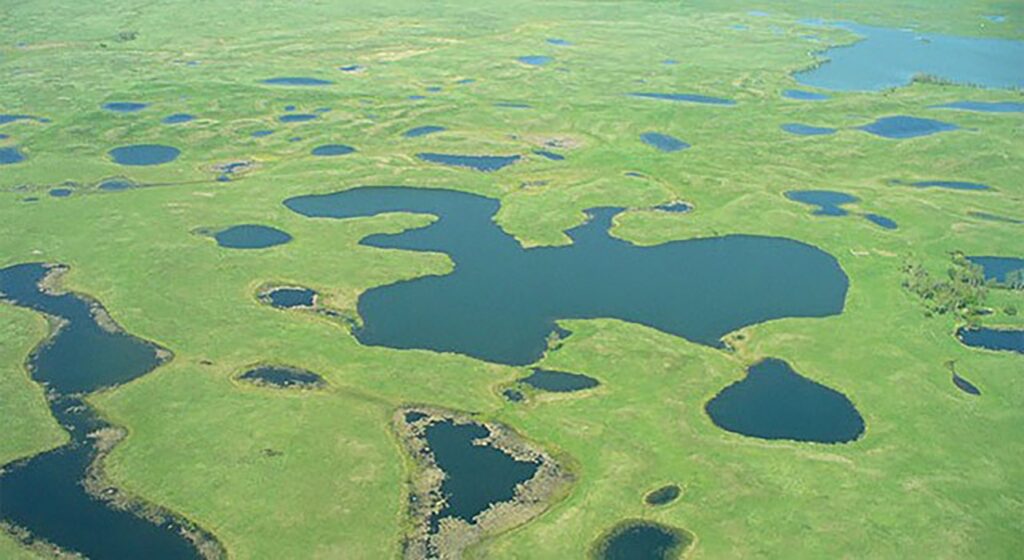
Prairie potholes provide much of the duck breeding habitat for North American waterfowl. USFWS Photo
Stretching across portions of Iowa, Minnesota, Montana, North Dakota and South Dakota, as well as parts of Canada, the Prairie Pothole Region contains millions of shallow wetlands left behind by retreating glaciers.
Those ponds provide nesting, feeding and brood-rearing habitat for waterfowl. The region is commonly called North America’s “Duck Factory” because it produces more than half of the continent’s breeding ducks during many years, according to the U.S. Fish and Wildlife Service.
That means birds hatched in the Dakotas, Minnesota or the Canadian prairie eventually migrate through and winter in states hundreds or even thousands of miles away. Hunters from Montana to Louisiana and California to the Chesapeake Bay all benefit from what happens on those northern breeding grounds.
When the potholes hold water and the surrounding grasslands provide nesting cover, duck production can soar. When wetlands disappear or no longer hold enough water, the fall flight can shrink right along with them.
Drain tile is underground piping farmers use to remove excess water from agricultural land. The practice can improve crop production and make wet ground easier to plant and harvest.
The concern is not simply whether a pipe runs directly through a protected wetland. Drain tile installed too close to one can draw water from the surrounding soil, potentially lowering the wetland’s water level or preventing it from filling normally.
A drain-tile setback establishes a buffer between a drainage system and a protected wetland. Those distances can be calculated using soil type, rainfall, topography, groundwater movement, wetland depth and other site-specific factors.
The current Fish and Wildlife Service rule formalizes a process under which the agency works with landowners to establish those setbacks. Landowners who follow an approved drainage plan receive a form of regulatory safe harbor, meaning they generally will not be held responsible if an unexpected impact occurs, provided the tile system has not been altered or expanded.
When the rule was finalized in 2024, the Fish and Wildlife Service said it was intended to provide landowners with greater consistency, clarity and transparency while protecting the habitat value of voluntary conservation easements.
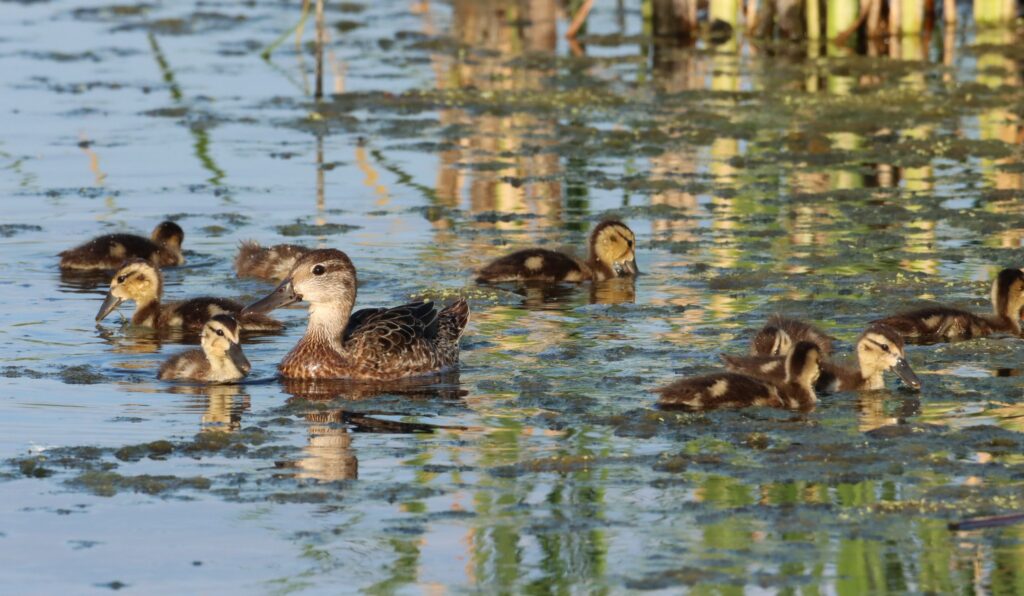
Any decision that impacts the health of our nation’s prairie pothole region can have a profound influence on future duck populations. Sandra Uecker\USFWS Photo
The Fish and Wildlife Service is reviewing the 2024 setback rule and gathering information about drainage near easement-protected wetlands.
Conservation groups fear that review could result in weaker or standardized setbacks that fail to account for the hydrology of individual wetlands.
The Sportsmen’s Alliance warns that setbacks must be scientifically calculated because every easement is different. A distance that protects one pothole might not protect another with different soil, groundwater conditions or terrain.
Ducks Unlimited argues that the existing “No Impact” standard should remain in place. For roughly 60 years, protected easement wetlands have been guarded against draining, filling and other alterations. DU supports maintaining those protections while continuing to give landowners certainty when they follow approved tile plans.
The fear is that weaker setbacks could allow a wetland to be drained indirectly. Nobody has to dig a ditch through the middle of a pond if a nearby underground pipe slowly pulls away the water needed to keep it functioning.
Small, shallow wetlands are especially valuable to breeding ducks because they warm quickly and support the aquatic insects and other invertebrates hens need before and during nesting. Losing those ponds can mean fewer successful nests, fewer broods and ultimately fewer birds heading south in the fall.
Many of the wetlands involved are protected through voluntary conservation easements.
Under those agreements, willing landowners receive compensation in exchange for permanently protecting designated wetlands from being drained, filled, leveled or burned. The land stays privately owned, remains on local tax rolls and can generally continue to be farmed, grazed or hayed when wetlands are naturally dry.
Much of the money supporting those conservation efforts has come from hunters through Federal Duck Stamp purchases, hunting licenses, excise taxes and private donations.
That point was emphasized in a July 30 letter signed by leaders from Ducks Unlimited, Delta Waterfowl, California Waterfowl and the South Carolina Waterfowl Association. The organizations told Interior Secretary Doug Burgum that hunters and anglers have invested hundreds of millions of dollars in prairie wetland easements.
The letter warned that allowing those wetlands to be drained would mean fewer wetlands, fewer ducks and an erosion of America’s hunting heritage, according to Outdoor Life.
In other words, these are not random parcels the government suddenly decided to regulate. They are wetlands that landowners voluntarily agreed to protect and that generations of hunters helped pay to conserve.
No single rule change is going to empty the skies overnight. Habitat loss is more often a death by a thousand cuts.
One pothole dries out here. Another loses its seasonal water there. A wetland complex that once gave hens several nesting and brood-rearing options becomes fragmented and less productive.
Multiply that process across the Prairie Pothole Region and the consequences could eventually reach every flyway.
Fewer breeding wetlands can mean lower duck production, reduced fall flights and increased pressure on wildlife managers to shorten seasons or lower bag limits during difficult population years.
Hunters frequently debate season dates, spinning-wing decoys, shell limits and daily bags. None of those conversations matter much if the breeding grounds stop producing birds.
Habitat remains the foundation of the entire system.
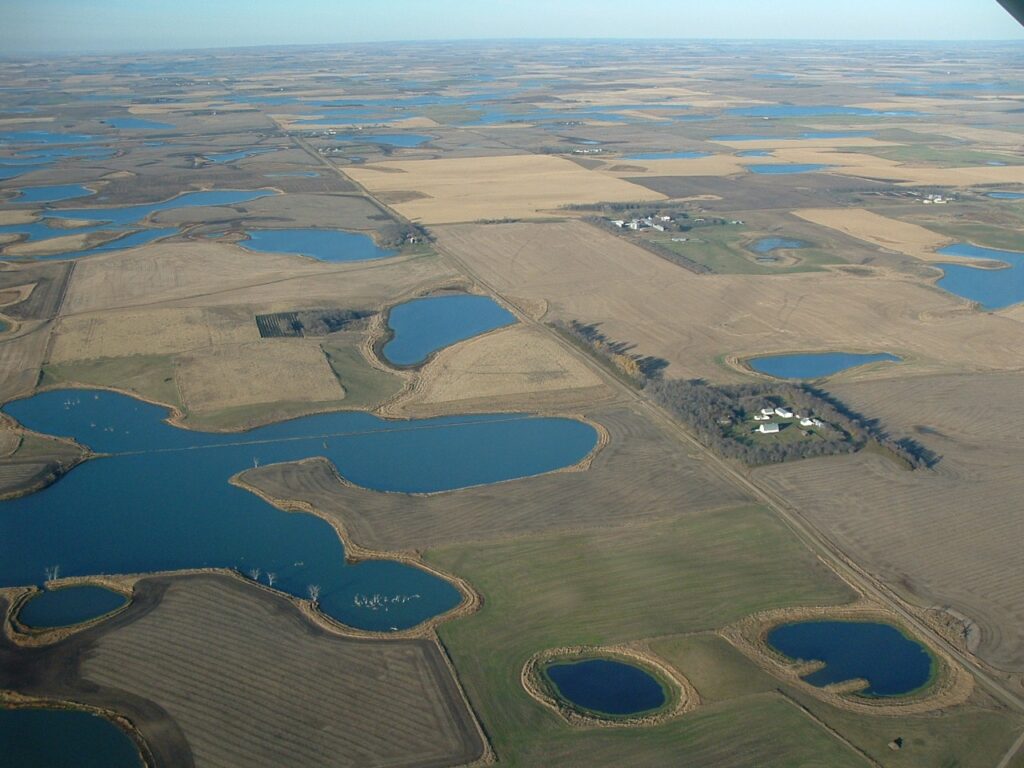
Much of the money supporting waterfowl conservation efforts in the prairie pothole region has come from hunters through Federal Duck Stamp purchases, hunting licenses, excise taxes and private donations. USFWS Photo
The Fish and Wildlife Service’s public-comment period ends Aug. 7.
Duck hunters should ask the agency to preserve the existing science-based, site-specific setback process, maintain the long-standing No Impact standard and continue offering regulatory certainty to landowners who follow approved drainage plans.
Personalized comments generally carry more weight than copied form letters. Hunters should briefly explain why the Prairie Pothole Region matters to them, note the investments sportsmen have made in wetland conservation and urge the agency not to weaken protections on easements purchased for permanent habitat preservation.
Comments can be submitted through the federal review process linked by the Sportsmen’s Alliance or through Ducks Unlimited’s “Save the Duck Factory” campaign, including the organization’s own petition. DU is also collecting petition signatures, but hunters should submit an individual federal comment whenever possible.
August 20, 2026 •iSportsman Staff