
Tactics
Drop Shotting for Bass: A Finesse Rig Worth Learning
September 1, 2026 •iSportsman Staff
October 17, 2025
John N. Felsher
Most people probably learn how to hunt by following their father, another relative or an experienced friend.
I grew up fishing and hunting with my dad who loved teaching young sportsmen about the outdoors. Dad always used to say, “You can either fish or take small children fishing, but you can’t do both at the same time. Decide what you want to do and stick with it.”
This philosophy also applies to hunting. When hunting with young children, Dad always carried his gun, but rarely fired it. He wanted the children to do the shooting. He frequently missed excellent opportunities to take shots himself if he thought a child could shoot.
Too many sportsmen today don’t understand this concept. They want to hunt more than they want to take their children hunting. If they think that way, they lose something precious by not taking their sons and daughters with them.
When hunting with youngsters, make it all about the children. Many people expect youngsters to act like Daniel Boone and constantly yell at them when they make mistakes. Children will make mistakes, but people learn best by making mistakes. Don’t do everything for children. Teach that child how to do things correctly. Then let the child do it, as long as it’s safe.
Make every outing an adventure for youngsters. While walking in the woods, Dad explained the interconnected web of nature. He took time to point out tracks and animal sign. He taught us how to identify birds and animals and told us something about them, even if that meant returning home with a slightly lighter game bag.
Squirrel season offers a great time to introduce young or novice hunters to the sport of hunting. Many states hold long squirrel seasons with liberal limits. Young hunters walk around and don’t need to sit still and quiet for long hours. Children usually get more action hunting squirrels than deer or turkeys.
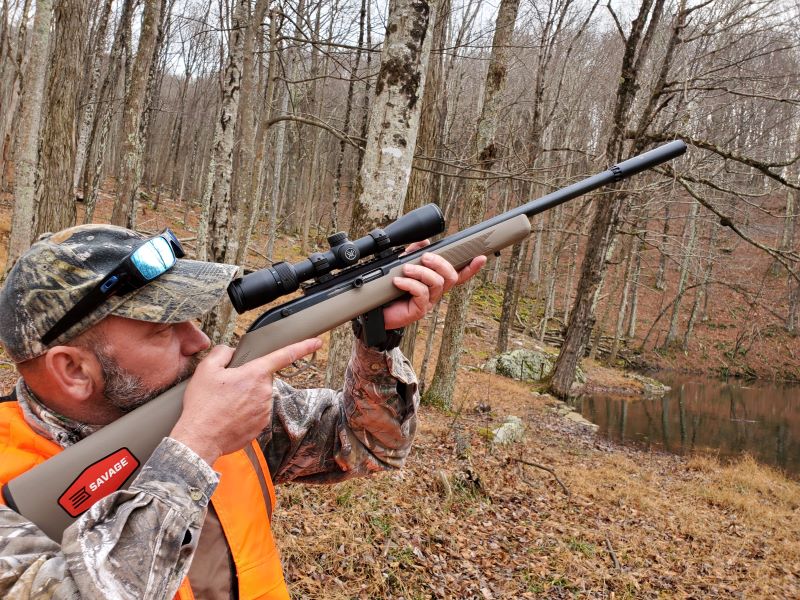
Squirrel hunting is the best way to sharpen your woodsmanship, and shooting, skills regardless of your age. Larry Case Photo
First teach children how to spot the “Gray Ghosts of the Forests.” Squirrels can quickly disappear in branches, holes and foliage of big trees. The masters of concealment repeatedly fool even the most experienced woodsmen. For practice, take young sportsmen to a park. See how many squirrels the youngsters can spot. Then, let them try to sneak up on some squirrels as if hunting.
Of course, locating squirrels living in a forest requires much higher skill levels than seeing ones in a park. In good squirrel habitat, cover ground more thoroughly rather than cover more ground. Take a few steps. Then, stop to look and listen. Without making quick movements, advance a few more steps and stop again. Keep repeating. Periodically, find a fallen log or comfortable tree trunk and sit down. Remain still and quiet while scanning and listening. After a while, move a short distance and repeat.
Scan the trees for any movement or odd shapes on tree trunks and branches. Hunters commonly hear squirrels long before they see them. Listen for the distinctive sound of claws scratching on rough bark, branches shaking or objects dropping to the ground. Squirrels often bark to proclaim their territories, giving away their locations.
Squirrels don’t always stay in trees. They regularly forage on the ground, especially later in the season or on windy days. Listen for them scampering over dry leaves.
Hunting in teams allows socialization, creating an excellent way to introduce children to the sport and building lasting bonds. Alerted squirrels habitually put tree trunks, large branches or other cover between themselves and hunters.
When a squirrel hides, the experienced hunter walks around the tree making noise while the youngster remains alert and quiet in place. The squirrel will naturally focus on the moving person and try to hide from that individual. It could move slightly, giving away its position, possibly providing the youngster with a good shot.
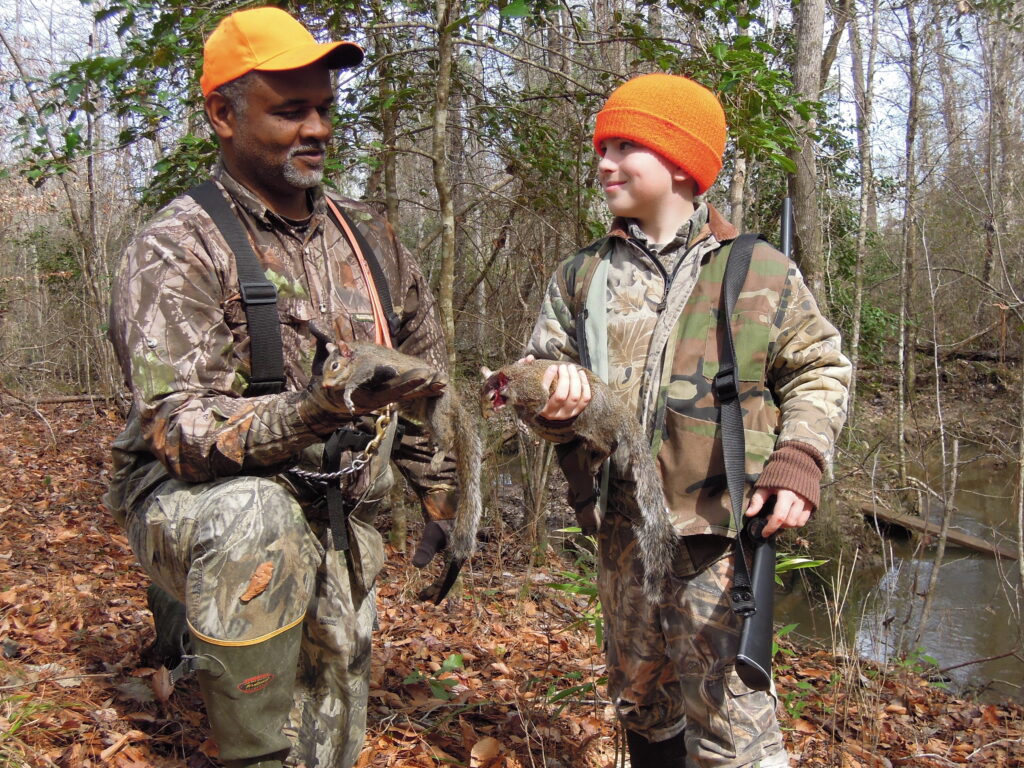
Hunting in teams allows socialization, creating an excellent way to introduce children to the sport and building lasting bonds. John Felsher Photo
Many sportsmen use boats to reach their hunting spots, but hunting from small boats, where legal, creates a great way to bring young children on the outing. Federal law prohibits firing at migratory birds from boats under power, but most states allow people to hunt from human-powered boats, like canoes and kayaks. State laws differ, so always check the laws first.
The adult sits in the stern of the boat, paddles, controls the positioning and spots game. The child sits in the bow ready for action with the gun barrel pointing forward or off to one side so the muzzle faces in a safe direction outside the boat.
When hunting from a small boat, sportsmen can cover more territory and take children to places where they could never possibly walk. In a boat, sportsmen can carry extra supplies, snacks and refreshments to take occasional breaks if they become hungry or thirsty. Some sportsmen even cast for fish while watching for game.
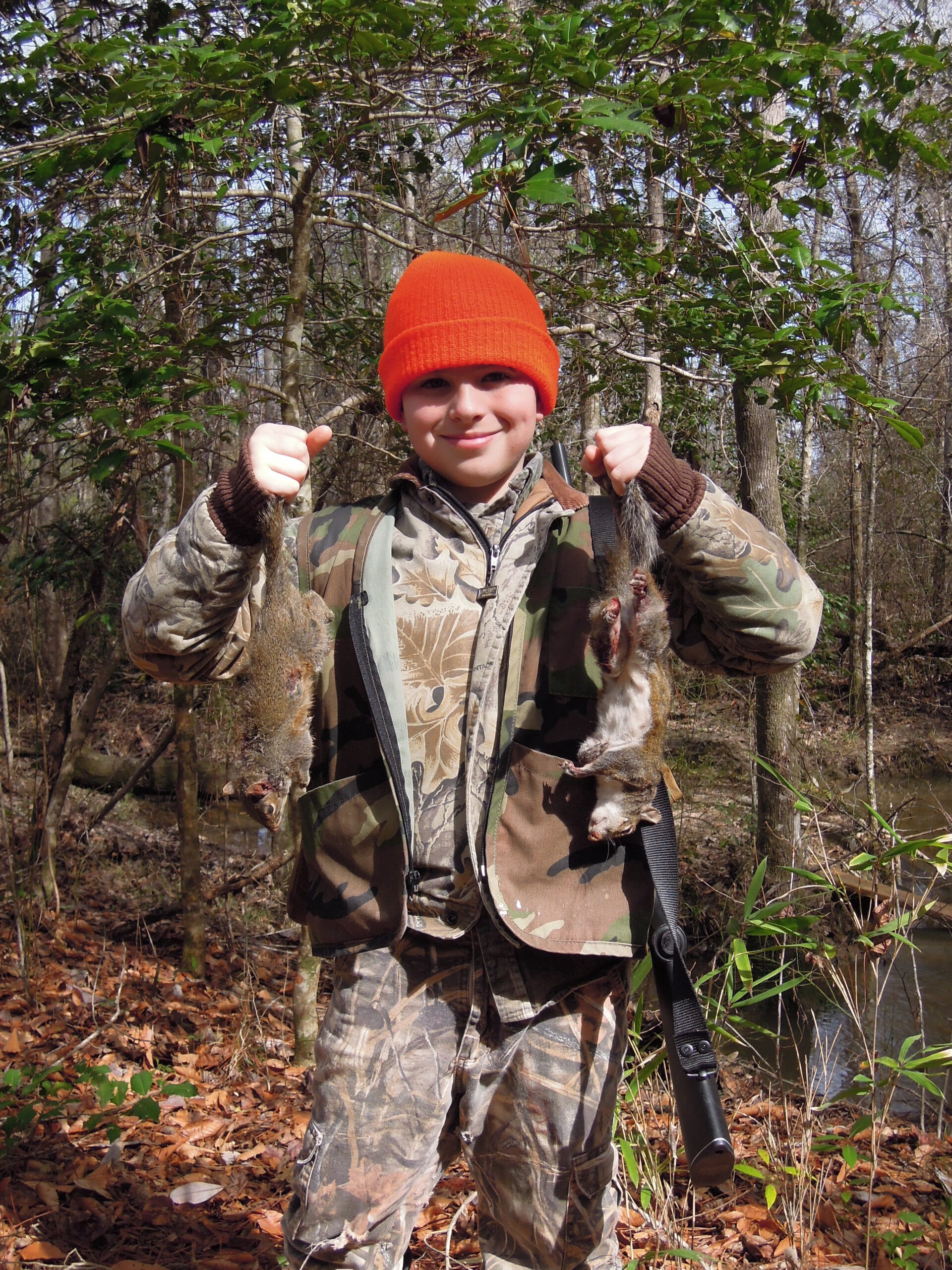
Make every outing an adventure for youngsters. John Felsher Photo
Although Dad didn’t care as much about bagging limits as enjoying good times with his children, he never compromised on safety. From our earliest age, he pounded safety into our heads. We never handled a gun without first making sure it was unloaded. We never loaded our guns until we left the boat or vehicle and unloaded before getting back into the vehicles. Whenever crossing obstacles, everyone unloaded their guns. It only takes seconds to reload, but it takes less than a microsecond to cause a tragic accident.
Dad also stressed that we never pull the trigger unless we positively identified the target and what was beyond or next to it. If that meant not taking a questionable shot and letting game escape, so be it. We could always hunt other game, but can never take back a mistake that instantly ruins lives. Dad used to say, one can never take back a bullet fired or an ill-spoken word.
Because hunting with children takes effort, sacrifice and patience, many sportsmen prefer the company of like-minded adults. That’s fine, but parents will never meet better fishing or hunting partners than ones they created over time – the most precious, fleeting and unforgiving of all gifts.
 John N. Felsher is a professional writer, broadcaster, photographer, editor and consultant. An avid sportsman, he’s written more than 4,000 articles for more than 176 different magazines on a wide variety of outdoors topics. He also hosts an outdoors tips show for WAVH FM Talk 106.5 radio station in Mobile, Ala. Contact him at j.felsher@hotmail.com or through Facebook.