I was doom-scrolling social media the other night when I thumbed across a post by Driven Hunter’s Pat and Nicole Reeves. Nicole had arrowed a buck—perfectly it appeared on the video of the shot—and after a tracking and blood trailing job that spanned at least an evening and the next day and nearly a mile, the buck was never found. It happens, and I applaud them for showing the good moments along with the tough ones. I had a similar experience more than a decade ago on a Minnesota bow hunt.
The shot looked perfect. An hour after making it on the large whitetail that had come running to the sound of my rattling, my outfitter, Pat Gaffney and I inspected the blood-soaked arrow found a few yards past where the wide-racked buck had stood. It had been a complete pass through.
We barely walked 100 yards when Gaffney shouted, “There it is!” The problem was, it wasn’t dead. The buck leapt from cover and sprinted downhill. Blood soaked the ground where the deer had bedded up, but a short distance farther, disappeared altogether. With a regret I still feel, we never did find that deer. But thanks to Gaffney’s amazing tracking skills, much of it hinged on identifying a turned leaf here or there and a keen understanding of the terrain and how deer travel it, he kept my chances alive much longer and actually picked the blood trail back up, trailing the buck at least a half mile before losing it for good at a wide creek.
While obviously I didn’t hit the buck as well as I thought I had, the tracking job put into trying to find it was exhaustive and in most cases, would’ve produced a trophy at the end. For deer hunters, especially bowhunters, learning to read blood and other sign is an essential skill that must be developed to responsibly retrieve game. Deer are tough, and while hopefully few hunters will have to go through what I did on that buck last season or Nicole Reeve did earlier this season, the fact remains: Hunt long enough—bowhunt at all—and you will have to track a wounded deer. Here are the keys to reading the sign that will help you find your trophy when it really counts.
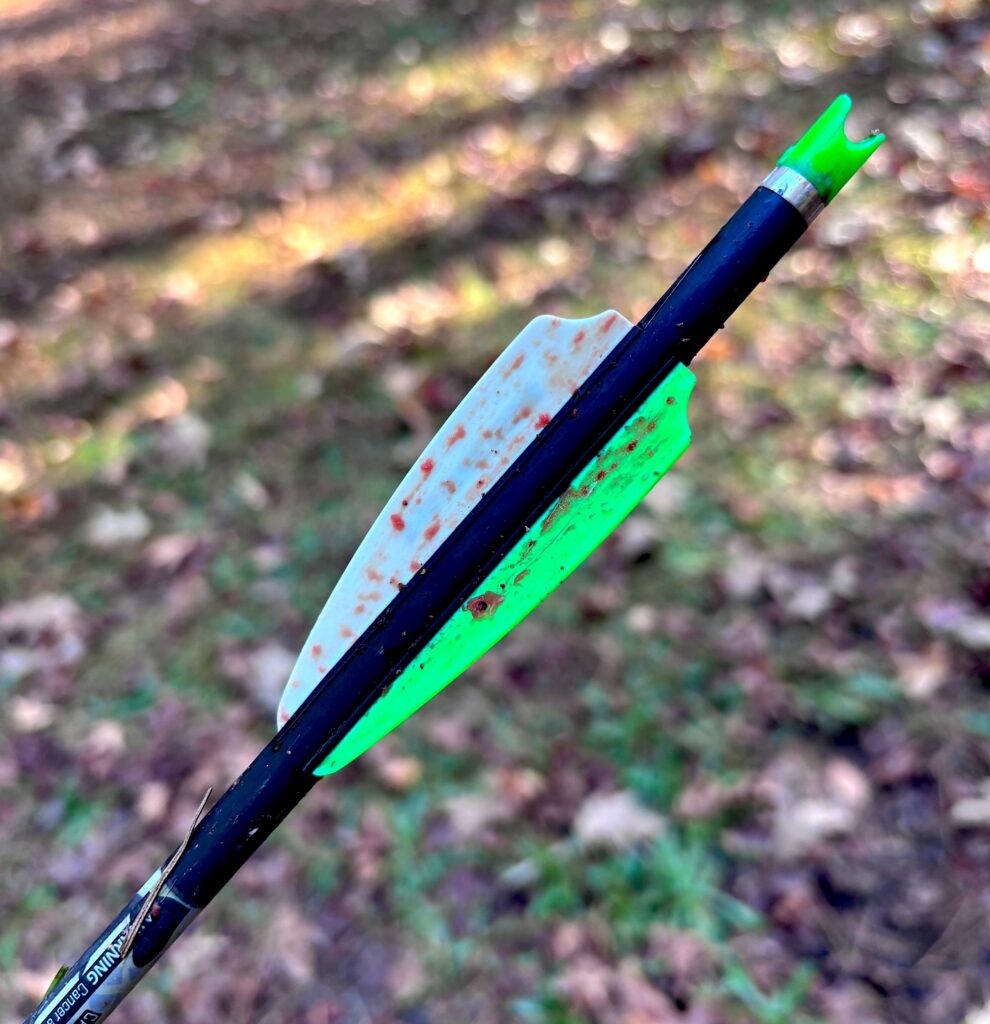
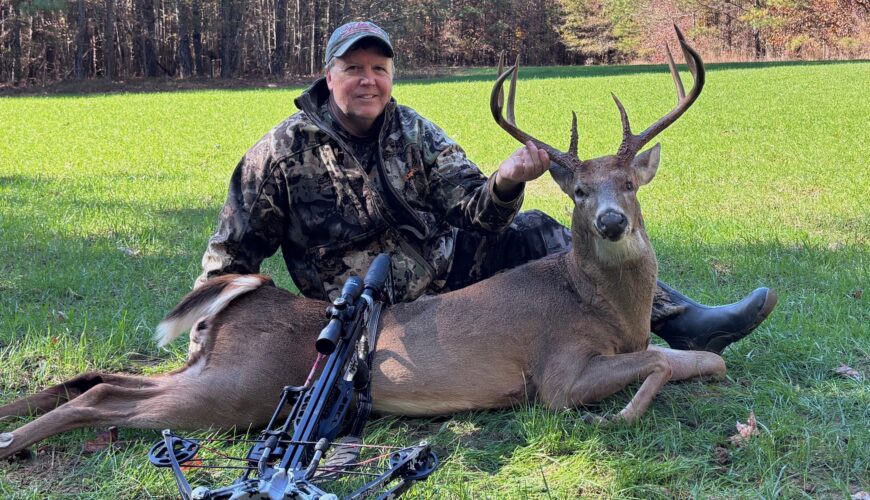
Find your arrow and determine if blood is on the fletching indicating a pass-through shot. Doug Howlett Photo
Observe The Shot
Watch for the following as you release the arrow.
- Try to identify precisely where the arrow actually strikes the animal, as this will provide the first indication of how well it is hit. A hit in the leg, too far back or too high means you need to wait at least three or four hours before even attempting to track the animal. A good, broadside hit in the vitals means you can get on it anywhere between 30 minutes and an hour. The more time you can afford to wait, the better.
- Watch the deer until it disappears from sight. Note the direction it was running. If blood is not found immediately in the spot it was hit, knowing which way it ran can put your search in the right direction. Identify a landmark near the last place you saw it from your stand.
- Note how it was running. This isn’t always helpful, but if the deer is stumbling, it could mean a quickly lethal hit; if it is limping, could mean a leg shot; and if it is hunched up, could mean a gut shot.
- Try to tell if your arrow is sticking out of the animal or if it passed through. A pass-through shot should translate into more blood and a shorter tracking job.
- Listen. Oftentimes, you can hear a deer collapse with a crash if it is hit so well it can’t run far.
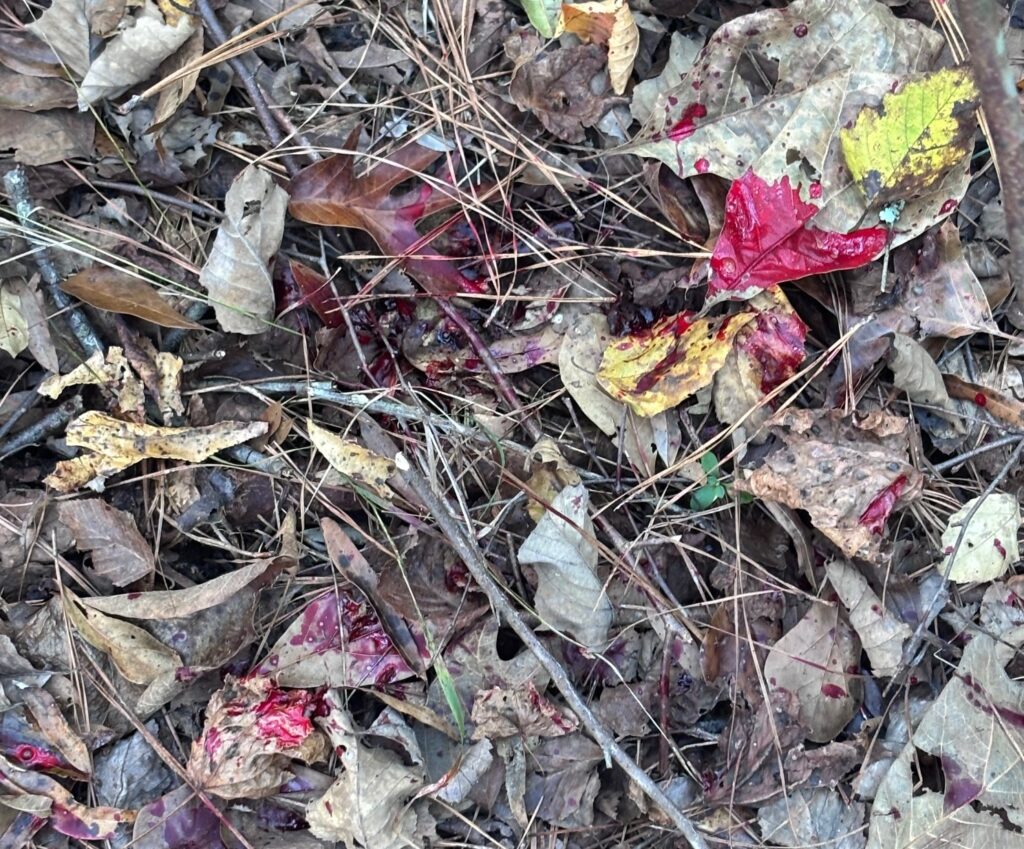
Rich, bright red blood can be from the heart or from any large tissue area fed by numerous blood vessels. The more blood, the better. Doug Howlett Photo
5 Telltale Blood Clues
Blood is the best evidence of how well a deer is hit and often provides the most visible trail to recovering the animal.
- Pinkish, frothy blood with small bubbles typically indicates a lung shot that will prove lethal in just a short distance.
- Rich, bright red blood can be from the heart or from any large tissue area fed by numerous blood vessels. The more blood, the better the indication of whether this shot will be fatal or not. Sparse, bright droplets may simply indicate a nonlethal wound such as a hit in the leg or the brisket.
- Dark, almost burgundy-colored blood may indicate a hit in the liver or kidneys. These shots are lethal, but take longer to kill the deer. Wait two to three hours before tracking.
- Blood that has a greenish tint or has small plant matter mixed in generally indicates a stomach shot. These shots are ultimately lethal, though can take a long time before a deer succumbs to them. Wait at least five hours before pushing on with the search.
- Blood droplets from a walking deer are more uniform in size with minimal splatter. If a walking blood trail becomes erratic, the deer is close to collapse. Keep a sharp look ahead for its body. Droplets from a running deer will splatter more with the fingerlets of blood striking the ground in the direction the deer is traveling. You may have more searching ahead on this deer, which is obviously still covering ground.
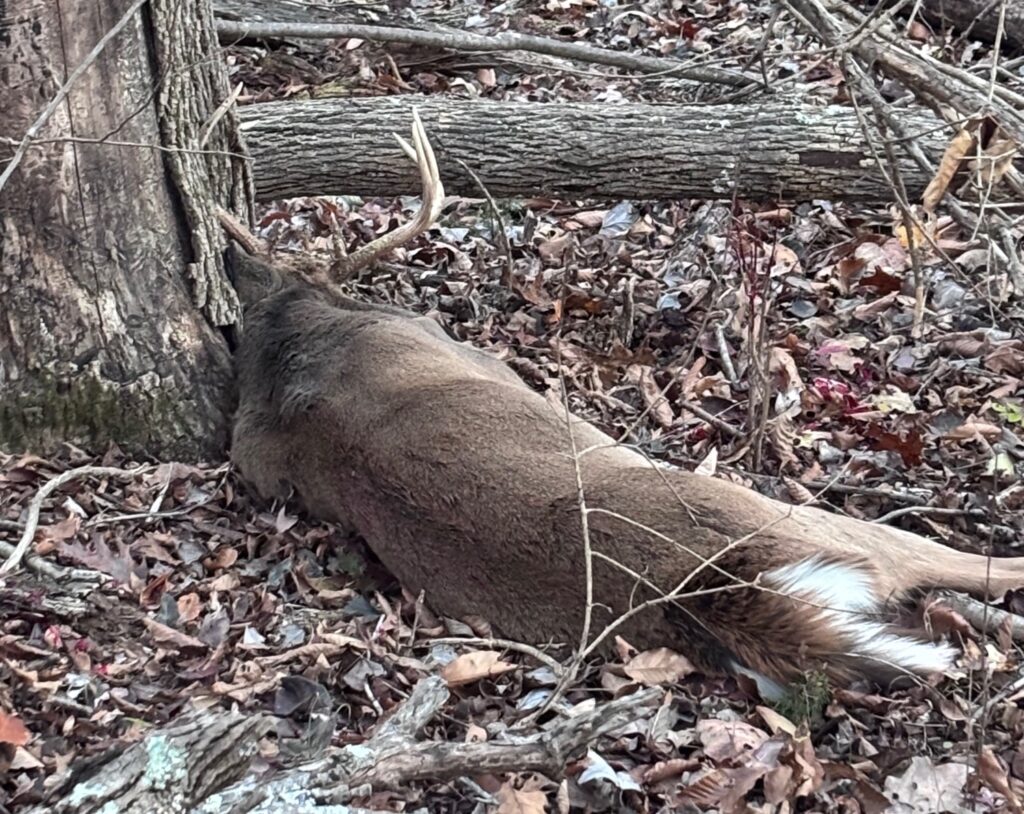
Seriously wounded deer most often run downhill. Doug Howlett Photo
More Blood Evidence
- A wide blood trail—2-feet across or wider—with lots of large droplets indicates a pass-through shot that struck the heart or a major artery. The spray of blood is caused by pumping blood. It should soon run out.
- Blood in a narrow trail and looking like it is to one side of the deer’s path of travel indicates a shot where the arrow did not pass through. Blood is leaking from the entry wound and will be harder to trail than a pass-through shot.
- A deer may not bleed much initially until the body cavity fills and begins leaking through the wound(s). Severed chunks of lung or other vitals can also block a hole that may work free as the deer travels. If no blood is initially found, work back and forth in a wide sweeping arc for at least a hundred yards in the direction the deer ran off.
- Don’t just search for blood on the ground. Smears on tall blades of grass, limbs and alongside the trunks of trees can indicate a high shot that may bleed intermittently as the body cavity fills and expels blood or can indicate a high shoulder or back wound, all of which translates into a lengthy tracking job ahead.
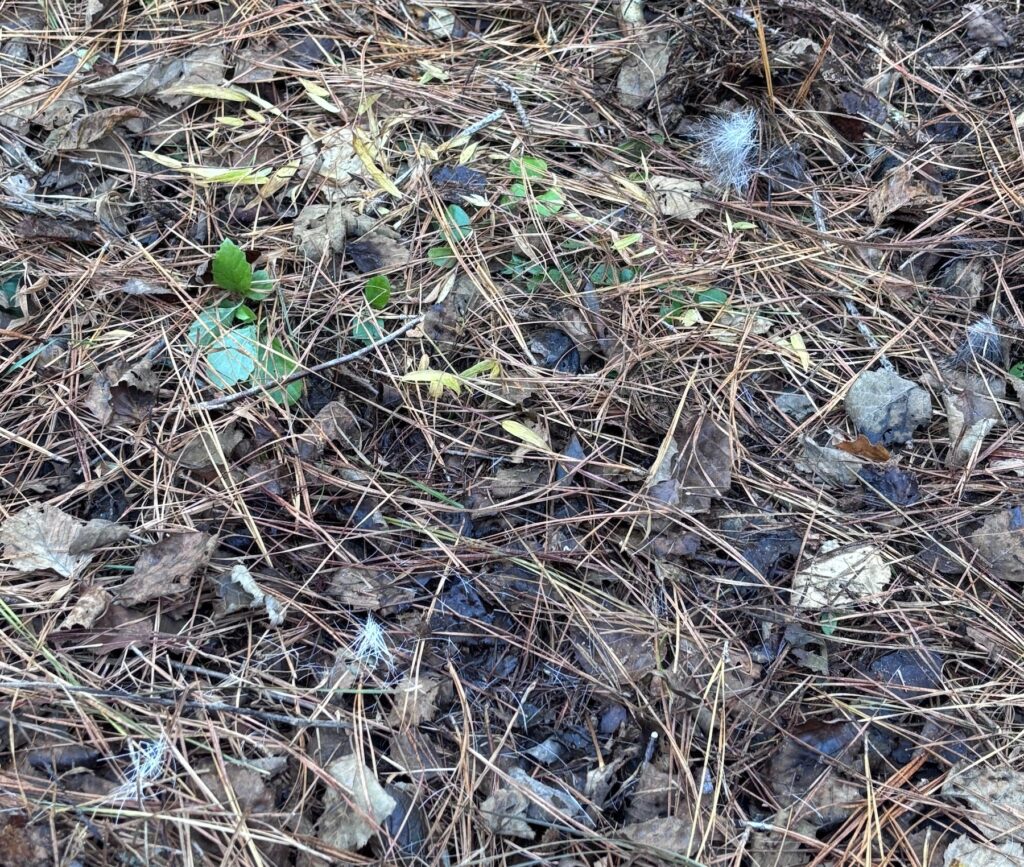
In the absence of blood, patches of hair knocked loose from a shot can tell you where the deer was hit. Doug Howlett Photo
Hair Samples
Hair can also provide a clue as to where exactly the deer was hit and will often be found on the ground in the area where the deer was first struck by the arrow, at fence crossings and in spots where a deer falls or lays down.
- Hair high on the body along the back and spine will typically be coarse, hollow and almost grayish color with dark tips. Find this hair, and you hit the deer high. Could be a lengthy tracking job since if you hit it in the spine, the deer would have likely collapsed on the spot.
- A good hit on the side of the body will knock hair loose that is brown, not as coarse as hair along the back or chest and have lighter tips.
- Course brown hair with black coloring right at the tips could mean a leg shot.
- White hair indicates a possible low shot, though if the hunter is shooting from a steep angle, it can simply be where the arrow exited the body after passing through from a high angle on the opposite side. A pile of sliced white hair might mean the arrow simply sliced the stomach as it passed too low. Find your arrow to confirm if it is blood soaked all the way around its diameter.
Important Tracking Considerations
Whitetail consultant and outfitter Pat Gaffney offers the following advice when tracking a wounded deer.
- An approaching rain or snow storm can dictate how aggressive a hunter has to be in tracking a wounded deer. If a storm is on the way, stick with the trail even if you haven’t waited as long as you think you should have.
- No more than two people should initially track the deer; one intently working the trail of blood, the other circling the area nearby to seek out new directions the deer has taken or leap from to more blood sign that can speed the search up. Too many people can simply trample over the sign needed to trail the deer.
- Leave a piece of toilet paper or biodegradable flagging tape at each spot where blood is found. This not only establishes a pattern of travel to follow should the blood trail be lost but also provides a point to pick back up should you have to delay the search.
- Seriously wounded deer most often run downhill.
- Wounded deer also most often head toward water.
- In the absence of blood, look for other small details, such as a kicked up or overturned leaves or rocks, or on bare ground, tracks that don’t match the others, such as one that was made from a sliding hoof or is splayed wide as if the animal was running. Bent grass, especially with the dew knocked from it in mornings can also reveal the deer’s path.
- If it’s getting dark and you’re not sure how good the deer is hit or it seems like it is still covering ground, back out and wait until morning rather than risking kicking it up in the dark where it can cover much more ground.