Places
Turkey Season 2026: GAME ON!
March 13, 2026 •Doug Howlett
December 1, 2025
Doug Howlett
“Danger has always held a certain allure… It can be argued that youthful derring-do is in fact evolutionarily adaptive, a behavior encoded in our genes.” —Jon Krakauer, Into the Wild
Some years back I enjoyed the rare invitation to share an opening day dove field with a number of sailors and soldiers, most of them attached in some way to SEAL teams out of Virginia Beach and a good handful of them genuine frogmen. A hurricane had hit the area the week before, blowing most of the dove from the region, but we huddled among the sun-burnt stalks of corn and milo in the September blaze and gave our best to the few birds still flying. I only managed a few shots, most of them misses, but on the ones that ventured close to my fellow hunters, I witnessed spectacular shooting. Still, the shot opportunities were infrequent, and it was only a couple of hours before many of us retreated to the shade of a weathered barn for cold drinks, barbecue and a few inevitable stories.
Military operations were in full swing in both Afghanistan and Iraq at the time, and most of the men before me had seen varying degrees of combat, much of it recent. Many of the stories they shared were not ones to be recounted among a party of civilians—they were tales to be shared with men who knew, who had been there, who understood. But I had not been there. So for that reason, I respected the unspoken invitation to sit among them and kept my mouth shut as they talked. I silently drank in their tales of incredible adventure, realizing that despite a life spent outdoors and escaping a few dicey situations myself, I had nothing that compared to the experiences these men had lived through—and God willing, and in total appreciation of their sacrifices, hopefully never would.
It was clear from their tales that the same spirit that motivated them professionally, sparked their enthusiasm for the hunt. Many had grown up hunting and fishing long before they enlisted. I guess that shouldn’t have been a surprise. Hunting is the ideal foundation for the making of a good soldier who needs to have a strong understanding for navigating the land, marksmanship skills and even firsthand experience with death. Think World War I’s Alvin C. York, World War II’s celebrated Audie Murphy, Vietnam War sniper Carlos Hathcock or more recently, American Sniper’s Chris Kyle.
Ask sportsmen what they love about the outdoors and most will describe how they enjoy spending time outside or the spirit of self-reliance they achieve through it. Some will point to a spiritual connection with God they find in nature. Yet many, if pushed, will confess a love for the visceral connection to the planet only predator/prey relationships can generate. There is an unmistakable attraction to the untamed wildness and a flirtation with the danger found there that are hardwired into our being.
Of course, few of us ever really want to find that actual danger—at least not in the numerous bones broken, actually could die sense—particularly as we get older. But many of us do enjoy the exhilaration of walking that line where at any second, all hell can break loose, and if it does, we like to think we can handle it. It’s what drives most adventure seekers whether they participate in mountain climbing, skydiving, whitewater kayaking, or of course, the original extreme sports, hunting and fishing. The proximity to danger and the path we tread where man must battle to maintain control of the forces of nature reminds us—perhaps more than anything else we will ever encounter—that we are alive.
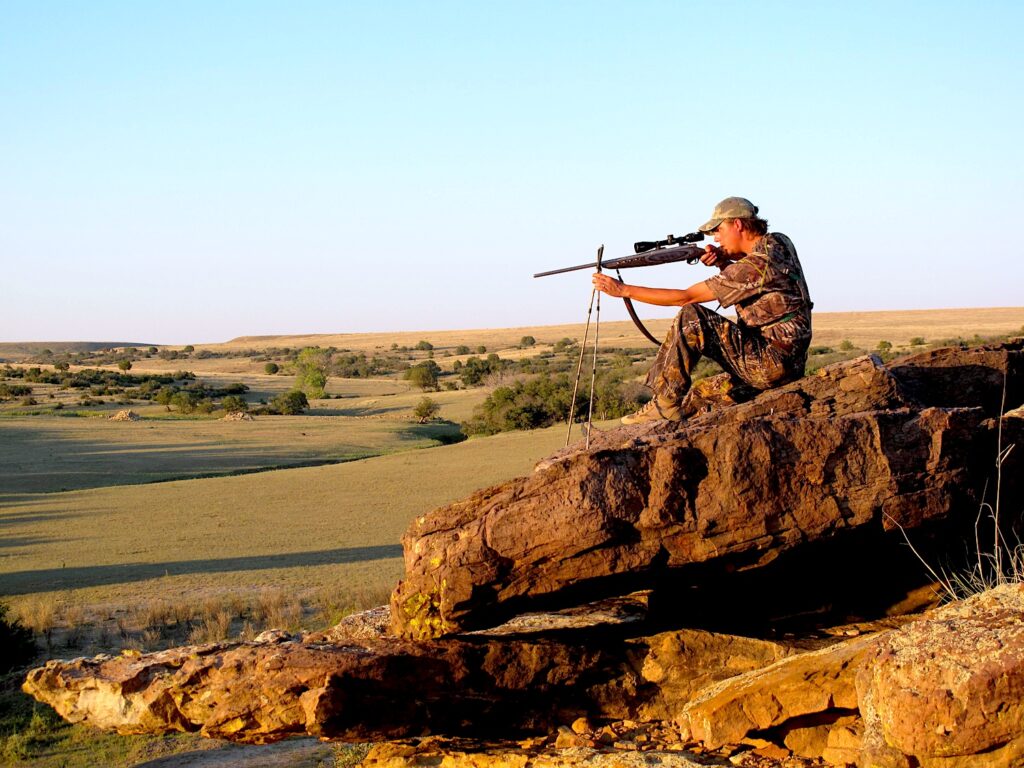
Hunting calls us to wild places, not as a spectator, but as a participant. Doug Howlett Photo
“Real freedom lies in wildness, not in civilization.” —Charles Lindbergh
From the very first cave paintings to the most modern outdoor websites, the telling of a good story has been as intertwined with the hunting and outdoor experience as the actual taking of game. But the best stories remain those that involve danger and survival. Favorite fictional accounts such as Melville’s Moby Dick, London’s To Build a Fire and Hemingway’s The Old Man and the Sea, as well as real life accounts captured by writers like Peter Hathaway Capstick, Jon Krakauer and Sebastian Junger continue to inspire a generation of adventure-seeking outdoorsmen.
Before video games became more than an accumulation of beeping dots and bars on a television screen, nature’s unmistakable pull beckoned my suburban friends and I in the form of “the creek.” This creek was a brackish flow of tidal water that originated in the Chesapeake Bay before pouring through Little Creek into Pretty Lake and eventually flowing into an ever-narrowing series of channels with the final one—no wider than a ditch—winding past houses and a patch of undeveloped woods before ending near the Presbyterian church two blocks from my house. The creek was strictly off-limits by our mothers, which made it all the more irresistible to a restless band of 12-year-olds.
There we caught minnows, turtles and snakes; raced homemade boats of wood and aluminum foil after storms dumped their toxic run-off from the surrounding roads; fought imaginary battles against Nazis, Vietcong and Commies; and suffered our first major injuries; a cut foot from a piece of sharp metal submerged below low-tide mud sidelining me once for two weeks with stitches and crutches; another time I learned why you whittle a stick with the knife blade away from you, not toward your hand. Trying to fashion a spear from a large stick and almost larger knife, I sliced the end of my thumb wide open. More stitches.
It was also the point from which my friend’s and my first epic adventure as “men” began. One summer day, three friends and I carried a jon boat four blocks to the wider channel of the waterway. We made a second trip to grab a small gas-powered trolling motor; fishing poles; matches; a few pieces of raw chicken, string and a net for catching blue crabs; and with much necessary secrecy, a half a pack of smokes one of us had found on the street and a six-pack taken from a father’s refrigerator.
Hitting the water we immediately chugged the small motor at full throttle for the larger water of Pretty Lake three miles away. Beneath the bright sun we tried to act like we enjoyed the bitter taste of the Pabst, while the cigarettes left most of us gagging and coughing. They were quickly abandoned. On the lake, the fishing and crabbing proved slow, but it didn’t matter. We were now self-reliant men, living off the land and water, answering to no one—at least temporarily. We were still men who had to be home by dinner, and by the time we began the return trek up the creek the tide was dismally low. The boat soon beached in the black, oily mud.
We were going to be in trouble, we accepted that, but the critical thing was to get the boat to safe harbor. Showing up without that would have meant much harsher punishment and a failure on our part to handle a tough situation on our own.
With hesitation, we slipped into the thigh deep mud and somehow pushed the boat to the deeper waters of the lake without being sucked to our deaths in the muck. With each slogging step, it seemed a very real possibility. Finally, sun burned, soaked and muddy, we pulled the boat ashore at the home of a family friend and called my friend’s dad to come get us. We didn’t care what scolding we faced. We had caught a few fish and crabs and had succeeded in saving the boat, and the exhilaration we felt as we lay in the grass was as cool and invigorating as the salty breeze from the nearby bay washing across our tired bodies.
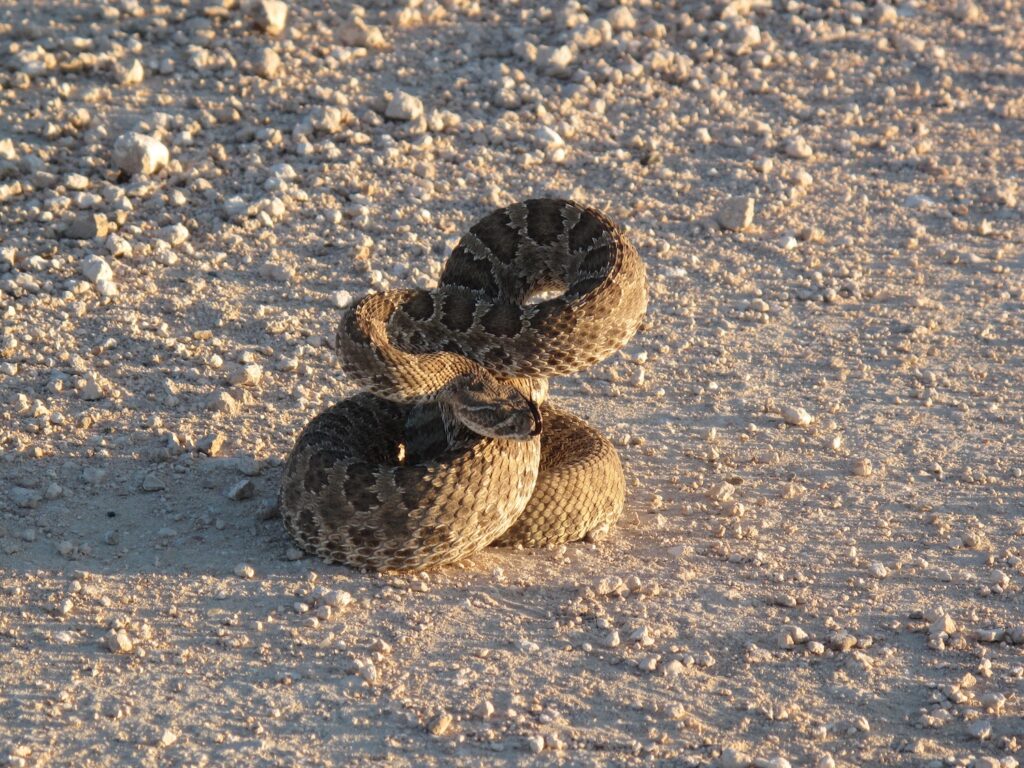
A brush with danger can be both frightening, yet exhilarating. Doug Howlett Photo
“Every man’s life ends the same way. It is only the details of how he lived and how he died that distinguish one man from another.” – Ernest Hemingway
“We all got it coming, kid.” – Clint Eastwood as Will Munny in Unforgiven
Let it be clear that I have never had even a remote death wish and try my best to avoid those activities I feel pitch the odds in the Grim Reaper’s favor. This has never been truer as I get older. I do enjoy a little excitement, however, and at times have found myself in predicaments that could have gone tragically wrong. Oddly, having survived those moments, my days on Earth and particularly in the outdoors always feel that much richer.
In my 20s, a friend and I were testing his catamaran in 20-foot seas when his Hobie Cat came off the crest of a wave, caught air and slammed into the face of the next one, flipping the vessel on its side and throwing both of us—without life jackets—into the water three miles from shore. When I sputtered to the surface, I was more than 50 feet from the Hobie, the tall waves often blocking my view of the vessel and washing us farther apart. I freaked and initially began slapping the water with my hands in a clumsy effort to swim. Then I stopped, reminded myself I could swim and gradually paddled my way to the hull. Together, my friend and I righted the boat and continued on—this time wearing lifejackets. My buddy later confessed that he had never been out when it was that bad. Had I known that beforehand, I would’ve never gone. Sometimes ignorance is bliss. That day it could have proved deadly.
Another time in Quebec, while riding in the rear of a floatplane searching for caribou below, the pilot banked the plane hard to my side so that I was looking straight down at the ground 500 feet below. Suddenly, the door next to me swung wide open, the only thing keeping me from plunging to my death was the seat belt I wore.
“Oh yeah, I forgot to tell you sometimes that door vibrates open,” the pilot said matter of factly.
Yet, none of these moments delivered that crystalline appreciation for life and the wilderness that being charged by a brown bear did. I was hunting black-tailed deer on Kodiak Island. Almost more than taking a nice buck, I wanted to see a huge brown bear. Several days into the trip, I got my wish.
Walking up a hill with Alaskan photographer Matt Hage and fellow hunter Derek McDonald, then with SureFire, a VW-sized brown bear jumped from behind a tangle of downed trees and charged us without warning. In the fleeting seconds it took the bear to cover the distance between us, I tried to swing my gun to my shoulder but the sling hung on my pack. Life at that moment came down to milliseconds and when I finally freed the measly .30-06 and brought it level, all I saw was brown in the 3×9 scope. Derek leveled his 7mm as well, as the bear reached the edge of the clearing in which we stood. He was little more than 40 feet away. I was just about to shoot when the beast turned and bounded away as abruptly as it had appeared.
The close encounter left us trembling and shaken yet nervously laughing as we continued to hunt—guns kept at the ready the remainder of the day. I have to admit the air smelled sweeter, the sun shone brighter and life felt richer the rest of that trip and for many days to come. The moment, though frightening, had been an awesome gift, but only because nobody had been hurt.
The outfitter was less than thrilled when writers encountered bears because he knew we would write about our encounters (guilty as charged), and he feared those tales scared clients away. I disagree. Nobody ever wants to get hurt, but the mystique of predators and untamed places, that need to experience those things first hand if even at a safe distance, I believe ultimately attracts more people than it frightens. It certainly draws more interest. Case in point, approached by anyone who has ever heard about my trip to Kodiak, they always ask about the encounter with the bear. Not once, has anybody ever asked how the hunting was.
Stay safe this season, but not too safe. Your life will be better for it.
(This story was first published in the Nov/Dec 2012 issue of Cabela’s Outfitter Journal and certain details updated for current publication.)