Places
Turkey Season 2026: GAME ON!
March 13, 2026 •Doug Howlett
November 13, 2025
Brad Fenson
The ocean below stretched out in an endless sheet of sapphire blue, broken only by the jagged shoreline of Molokai rising in the distance. This island was not built for tourists. The cliffs looked unforgiving, the coastline raw and wild, and there were few signs of human presence. It felt like a place where nature ruled.
When we landed, we wasted no time. My guide swung his truck into gear and ground up a muddy track that looked more like a riverbed than a road. The recent rains had left deep ruts and slick sections, causing us to slide and bounce until we crested a ridge. He parked beneath a stand of trees and pointed upward to a hollow in one of the big trunks that was alive with honeybees. Thick golden honey oozed down the trunk while hundreds of bees swarmed around it. For Hawaiians, honey has long symbolized abundance and wisdom. I took it as a good omen.
Molokai is a land of red lava rock, searing tropical heat, and deer that outnumber people by an astonishing margin. The terrain tore at clothes and boots as we pushed through thorny shrubs and ankle-twisting volcanic rubble. Dust coated everything, tinting us the same rusty shade as the ground. At first, the country looked barren, but when I raised my binoculars, the landscape came alive.
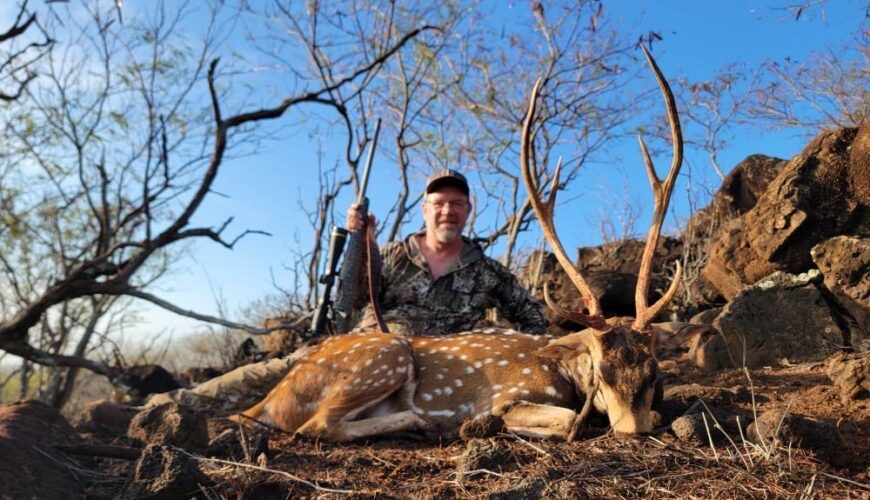
Axis deer are masters of camouflage. Their tan and white coats, covered in spots, disappear into the rocky hills and valleys. We picked a vantage point against a large boulder, kicked out a nest in the soil, and set our optics to work. The deer were using shaded draws to escape the heat of the day, and it was only a matter of time before they moved out to feed.
The first deer appeared below us, a doe with fawns slipping through the brush. More followed, and soon we were counting bucks and does on a far ridge. Through the spotting scope, we studied a heavy-horned buck that looked good, but with time on our side, we decided to hold out. As the sun slid behind the hills, the deer poured into the valleys in long, loose lines. We headed back to the truck, knowing tomorrow would bring another chance.
Axis deer are not native to Hawaii. They were brought to the islands in 1868 by King Kamehameha V, who imported eight animals from Hong Kong. On Molokai, the population has since exploded. Today, estimates put the number between 50,000 and 70,000, far more than the island’s human population.
These deer are both a blessing and a challenge. For residents, venison is a vital food source and an essential part of local culture. For the land, the pressure of so many hooves is a heavy burden, especially during times of drought. The pastures we drove through were bare in places, stripped down to dust by hungry mouths. Each morning and evening, the deer traveled between the rugged cliffs and the few remaining grassy flats, offering hunters an opportunity to intercept them on their daily migrations.
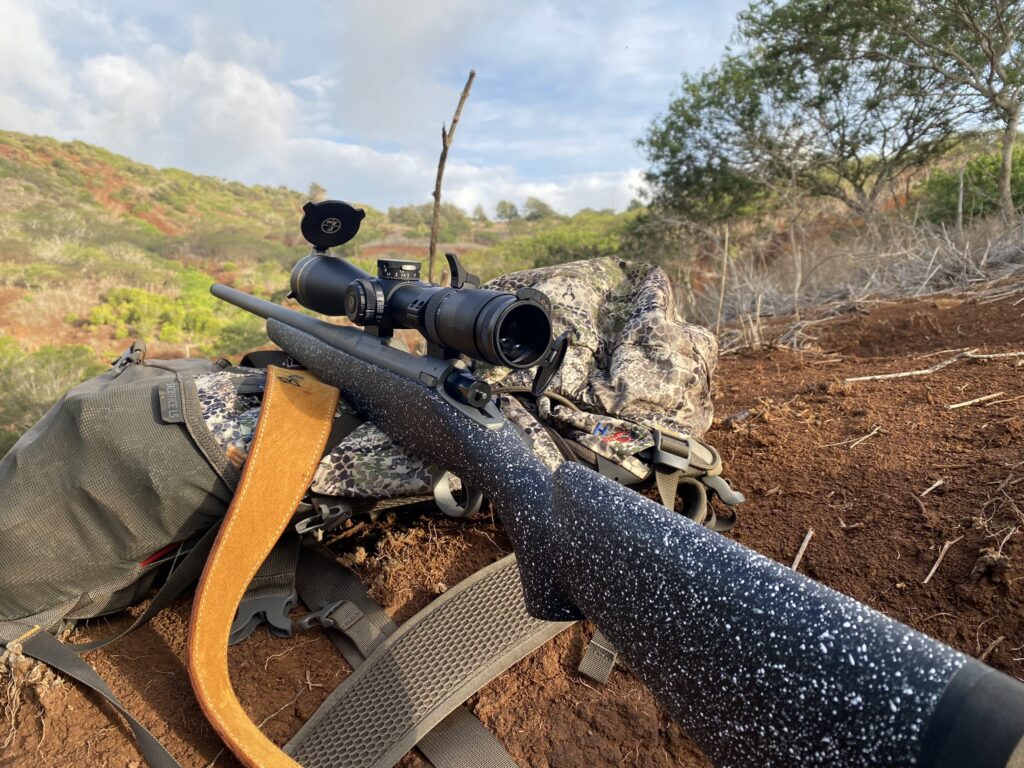
The Nosler 21 rifle chambered in 6.5 Creedmoor felt like a custom-built firearm and was ideal for axis deer. Brad Fenson Photo
At first light, we slipped into a blind built from piled branches around the base of a massive tree. The plan was to wait for deer funneling back to the escarpment after feeding through the night. The air was thick and warm even at dawn. As the sky lightened, deer began appearing everywhere.
Axis deer are notoriously wary. They use their eyes, ears, and nose with unrelenting vigilance, and one suspicious move can send an entire herd stampeding. At one point, a group of twenty spooked when one caught a glimpse of our parked truck’s roof. But others filtered back across the valley floor, winding toward the cliffs.
Through the spotting scope, I caught sight of a buck climbing steadily from below. His antlers rose above the brush, wide and tall, the kind of rack that stops a hunter cold. The decision was made instantly. This was the deer we had been waiting for.
We slipped from the blind and used sparse cover and boulders to close the distance. At about 280 yards, I steadied on a large rock and dialed the elevation turret on my riflescope. The buck paused, quartering on and searching for danger. My crosshairs settled. The Nosler 21 rifle chambered in 6.5 Creedmoor barked, and the deer collapsed onto the rocks.
The recovery was as rugged as the shot was decisive. The buck had fallen onto a ledge beneath a massive rock. We broke him down on the spot, packing meat into game bags for the long haul out. Over the course of the week, our group repeated this process many times, eventually filling coolers with enough venison to feed families back home.
Fresh meat never lasted long in camp. Backstraps and loins went straight to the grill, cooked on a Camp Chef stove, and seasoned with local flavor. We smashed quarter-pound venison burgers on the griddle, flipped them once, and topped them with all the fixings. Another night we glazed grilled backstrap with guava jelly reduced in butter. Meals like that erased the sweat and dust of long days in the field and reminded us why this hunt was as much about food as it was about adventure.
This country demanded reliable gear. Spotting scopes were a must for picking deer out of endless rocks and brush. Rifles and optics needed to be precise, clear, and rugged in tropical heat and volcanic dust. Boots had to withstand the abrasive lava rock and thorny ground cover. Every piece of equipment was tested, and every weakness was exposed.
But the right tools combined with patience, scouting, and a little luck produced unforgettable results.
Hunting Molokai’s axis deer is not easy. The land is punishing, the heat unrelenting, and the animals spook at the slightest mistake. Yet that challenge is what makes success so rewarding. When I look back on this trip, I remember the cliffs rising from the ocean, the honey dripping from the tree, the sweat running down my back, and the taste of venison eaten under a Hawaiian sunset.
Molokai is a land where the wild still wins most days. For hunters willing to put in the work, it is a place of red rock, tropical heat, and spotted deer that provide both challenge and abundance. I left with coolers of meat, memories etched into every scar on my boots, and the knowledge that I would return.
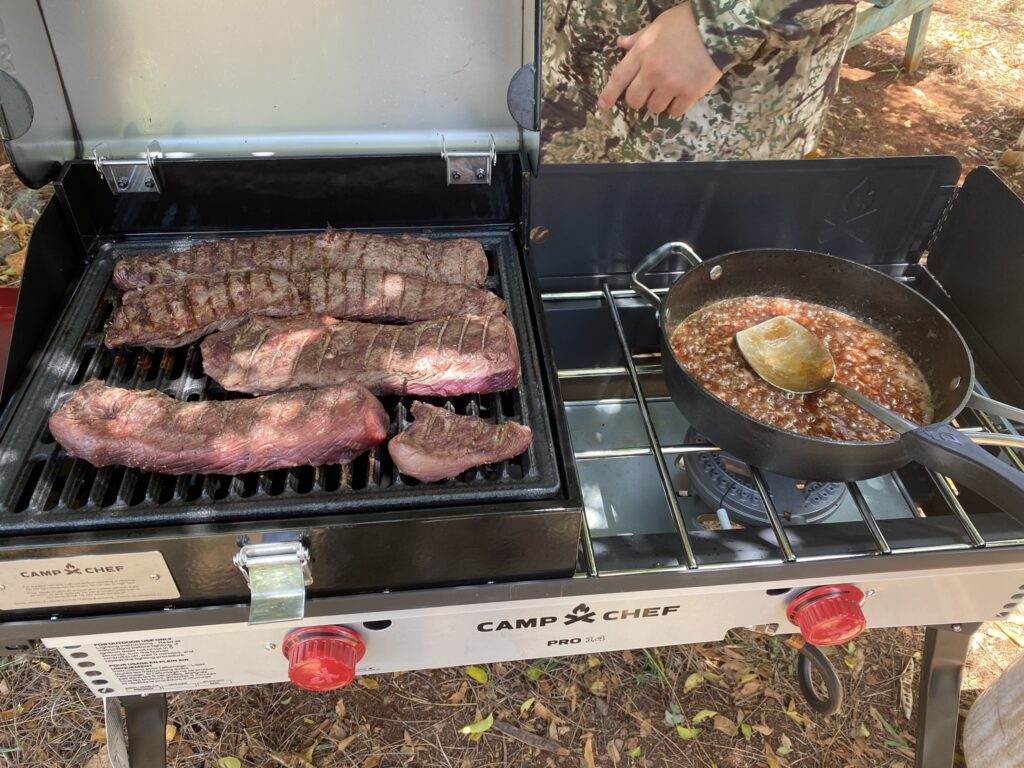
The Camp Chef Pro 14 stove, paired with the grill box and griddle, became the centerpiece of meals in the author’s camp. Brad Fenson Photo
Footwear: LaCrosse Lodestar Boots
Molokai’s volcanic terrain is unforgiving, with jagged lava rock, endless dust, and thorn-covered ground that will shred inferior gear. The LaCrosse Lodestar boots proved their worth with lightweight durability, breathability, and solid ankle support. They handled sharp pumice-like rock and long hikes in the tropical heat while keeping feet comfortable and blister-free.
Optics: Leupold SX-4 Pro Guide & VX-6HD Riflescope
Finding deer in endless red rock required glass that could pick apart every detail. The Leupold SX-4 Pro Guide HD spotting scope, paired with the CF-436 carbon-fiber tripod, delivered sharp resolution and stability for long sessions of glassing. For the shot, the Leupold VX-6HD riflescope provided clarity edge-to-edge and precise dialing with the Custom Dial System for accurate holds in the open country. Both pieces of glass were essential for spotting and successfully taking deer in rugged Molokai terrain.
Firearm: Nosler 21 Rifle in 6.5 Creedmoor
The Nosler 21 rifle chambered in 6.5 Creedmoor felt like a custom-built firearm, with exceptional fit and attention to detail. It consistently shot sub-MOA groups and paired perfectly with Nosler’s own 140-grain Ballistic Tip ammunition. Lightweight enough to carry across ridges yet powerful enough for longer-range shots, the rifle anchored a trophy buck at nearly 300 yards with flawless accuracy.
Ammunition: Nosler 140-Grain Ballistic Tip
For Molokai’s wary axis deer, precise and dependable ammunition was non-negotiable. The Nosler 140-grain Ballistic Tip in 6.5 Creedmoor offered flat trajectories, consistent expansion, and deadly terminal performance. It hit hard, anchored deer quickly, and gave the confidence needed to take decisive shots across open valleys.
Camp Cooking: Camp Chef Pro 14 Stove
After the hunt, nothing beats fresh venison cooked right at camp. The Camp Chef Pro 14 stove, paired with the grill box and griddle, became the centerpiece of our meals. Smash burgers of ground axis and backstraps glazed with guava jelly were cooked to perfection, fueling the crew for the punishing hikes ahead. Lightweight, portable, and reliable, the stove was the unsung hero of camp life.
Getting Meat Home
Sunscreen Rules
Go Hawaii Outfitters, operated by Molokai native and lifelong hunter Koa Manaba, offers hunters the chance to experience Hawaii beyond the beaches. Specializing in guided hunts for axis deer, Koa provides access to prime habitat, expert local knowledge, and an authentic island hunting adventure.
Axis deer are plentiful on Molokai, offering both a challenging hunt and outstanding table fare to take home. Go Hawaii Outfitters tailors hunts to all skill levels, ensuring visitors leave with venison and unforgettable memories.
For hunt details and booking information, visit: www.huntingoutfittershawaii.com.