Gear
Vortex Talon HD 10K Ballistic Laser Rangefinding Binoculars
March 4, 2026 •Zenna Howlett
January 27, 2026
Brad Fenson
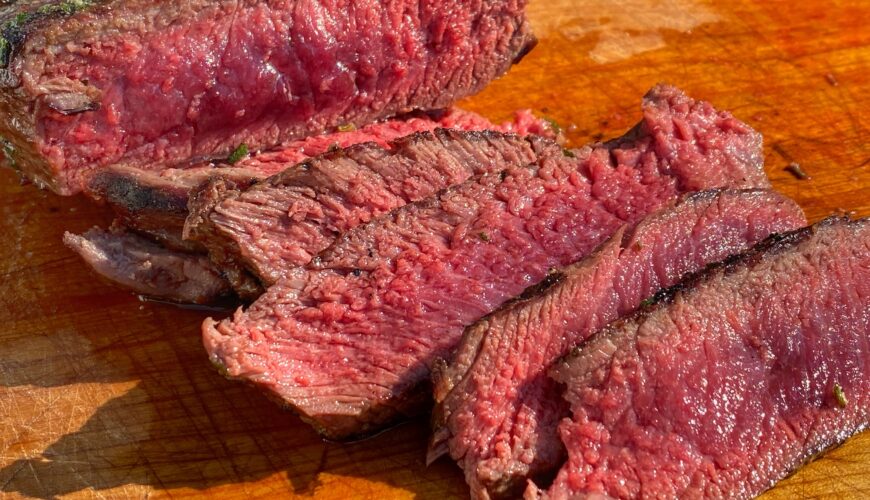
The smell of a barbecue or pellet grill wafting through the neighborhood is enough to start a grilling frenzy among the locals. I’ve often thought butchers should drive through residential areas with a portable barbecue, because the aroma alone would have everyone scrambling for a steak to throw on the grill. There’s a world of difference between a perfectly grilled piece of meat and one where even the dog turns up its nose. The good news is, with a little care and attention, anyone can grill wild game like a pit master.
It all begins long before the grill is hot. Quality on the plate starts with care in the field. From the moment an animal is harvested, how the meat is handled determines what you’ll taste later. I like to think of it as being your own quality-control manager, being careful, deliberate, and patient. The right knives make all the difference, and I rely on gear that’s as dependable as it is sharp. The Montana Knife Company offers custom-blade quality, and the Stonewall Skinner has become my top choice for field dressing and skinning big game. It’s the kind of knife that feels right the second you pick it up, being solid in the hand but nimble when you need to work around tight spots. It’s made from MAGNACUT steel, which holds an edge longer than most hunters will believe until they see it, and it shrugs off moisture and grime without complaint.
When it’s time to thaw, a little preparation pays off. I take the packages out of the freezer, score the wrapping with a paring knife right down to the frozen meat, and set it in a colander over a bowl in the fridge. As the meat slowly thaws, liquid drains away, keeping the meat dry and fresh. If it sits in that fluid, known as myoglobin, the flavor turns stronger and can develop that sweet, metallic “gamey” edge that overshadows the meat’s natural taste. Allowing the myoglobin to drain gives venison a cleaner, more refined flavor that speaks for itself.
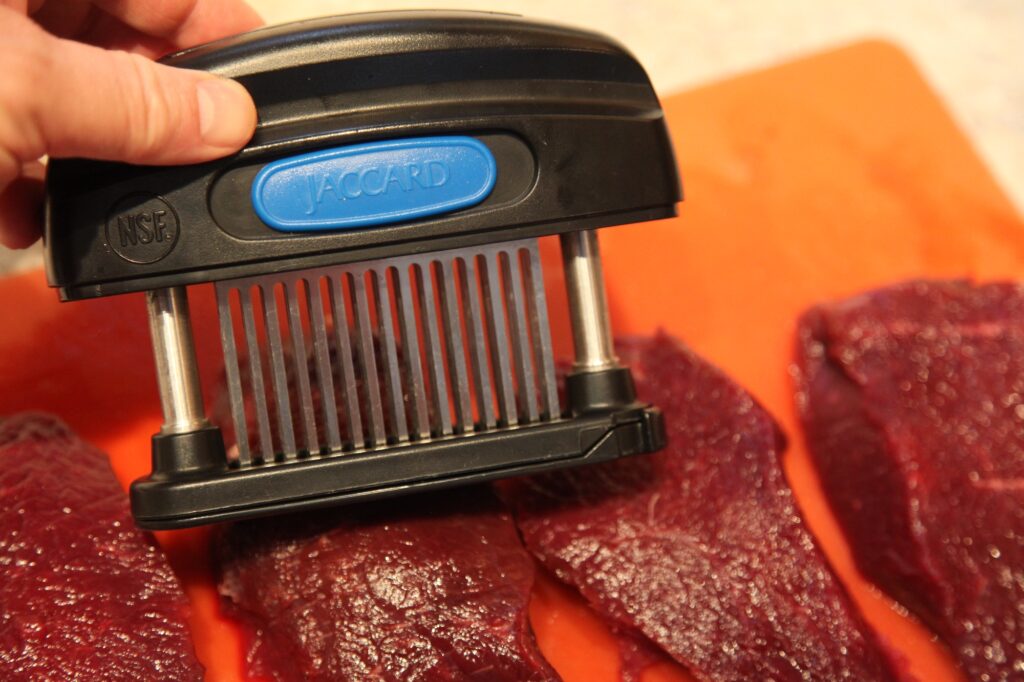
A Jaccard tenderizing knife is a palm-sized press with 45 or more tiny blades that pierce the surface of meat to break down long muscle fibers. Brad Fenson Photo
Even with perfect handling, some cuts can still use a little help. That’s where a Jaccard tenderizing knife comes in handy. It’s a simple tool, a palm-sized press with 45 or more tiny blades that pierce the surface to break down long muscle fibers. If you’ve ever brought home an old buck or bull with a reputation for toughness, give the Jaccard a try. The small incisions make the meat more tender and allow marinades to soak deeper, turning even the chewier cuts into something you’ll be proud to serve.
A marinade isn’t just about flavor; it’s also about chemistry. Oil helps brown and hold the seasoning, while acid-based ingredients like lemon juice, apple cider vinegar, or balsamic vinegar tenderize the meat. The best marinade is the one you make your own, using those basic building blocks to balance flavor and tenderness. I’ve tinkered with hundreds of combinations over the years, but the key is to keep it simple. Let the meat shine through and don’t smother it.
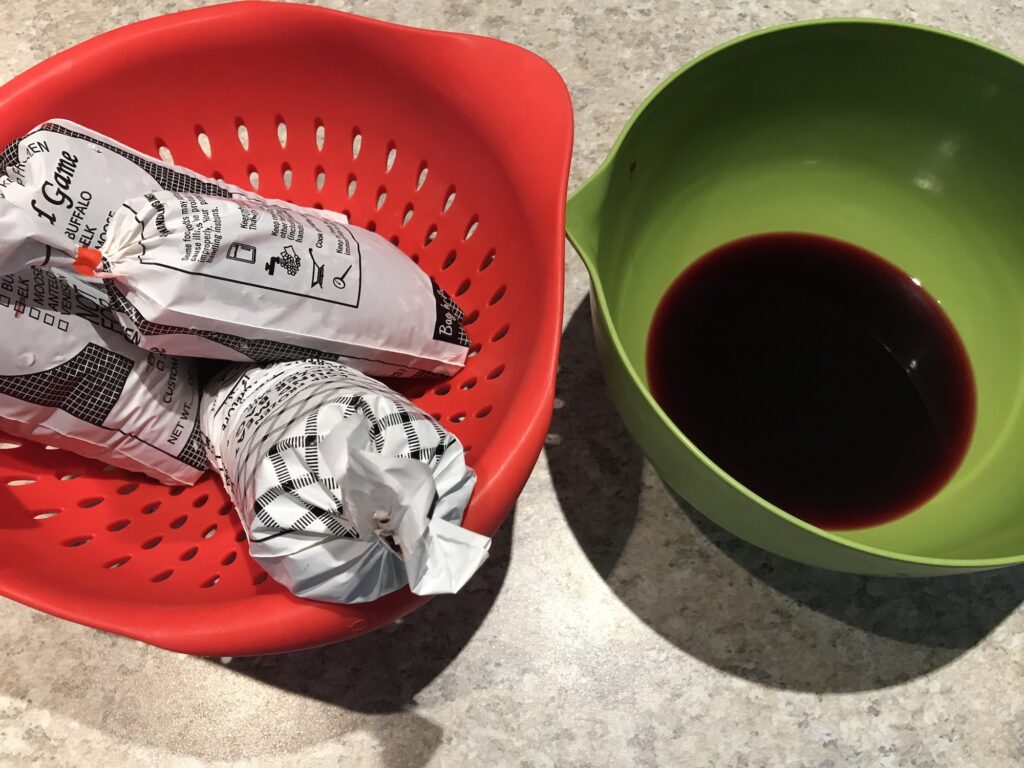
A marinade isn’t just about flavor; it’s also about chemistry. Brad Fenson Photo
Grilling wild game is a delicate dance between time and temperature. Lean, clean muscle cooks differently than domestic beef or pork, and precision makes all the difference. I aim for medium-rare at 130 to 135°F, or medium at 135 to 145°F. Go much higher and the meat dries out, losing its texture and flavor. Cook it too rare and it can be chewy. The magic number is right in the middle. Always remember, meat continues to cook for several minutes after leaving the grill, so pull it early and let it rest. That quiet moment on the cutting board lets the juices settle back into the fibers, keeping every bite tender and juicy. The ThermoMaven F1 Stealth (thermomaven.com) meat thermometer is ideal for quickly checking temperature, and its durable instant-read design handles the demands of grilling and camp cooking.
Because wild game doesn’t have the fat that farm-raised meat does, it cooks fast. Preheat the grill to 450°F, knowing it’ll drop to around 400°F when you open the lid. Steaks, kabobs, and burgers take only about three minutes per side for a perfect medium-rare finish. Uniform cuts ensure every piece cooks evenly, and sharp knives keep your slices clean and consistent. There’s pride in presentation, and precision tools make that possible.
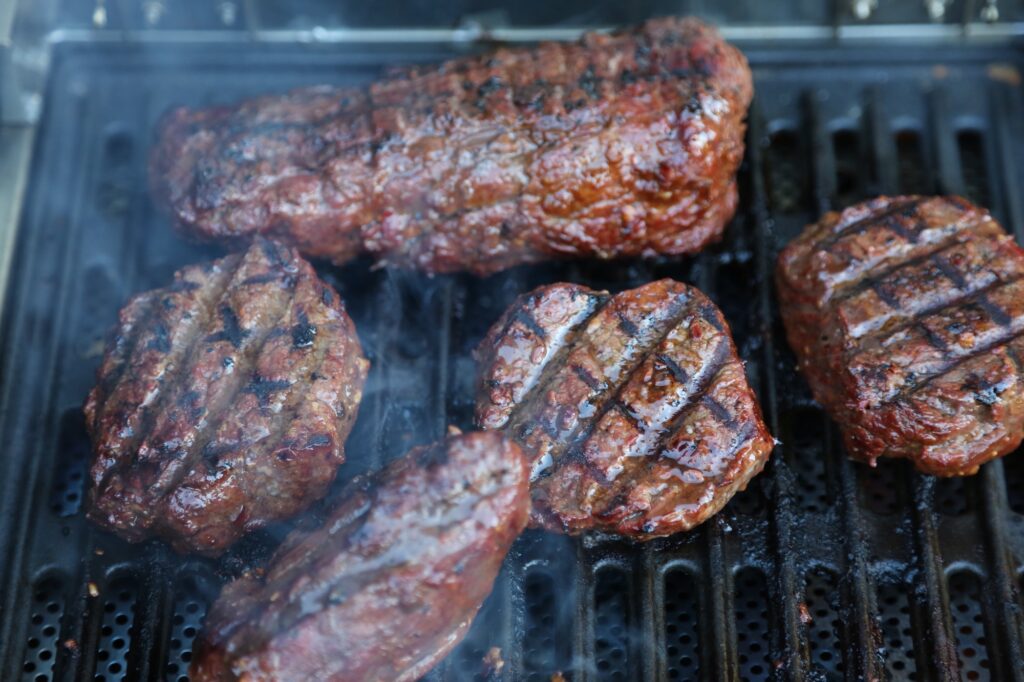
Remember that wild game doesn’t have the fat that farm-raised meat does, so it cooks much faster. Be careful not to burn it. Brad Fenson Photo
When it comes to flavor, a little basting goes a long way. Melted butter brushed on while grilling, and again right after, keeps the meat moist and rich without hiding its wild essence. Bacon-wrapping can be tempting, but it often overshadows the natural character of the meat. Let the venison, elk, or moose speak for itself. Simplicity is your ally.
For ground game, a few tricks can elevate the humble burger. Add a bit of high-fat cheese, milk, or cream to the mix before cooking, as the moisture keeps patties juicy even if you go past medium. Bread or cracker crumbs help bind everything together and trap flavor. Get creative with extras like jalapeños, fresh herbs, or chopped sun-dried tomatoes. Wild game burgers are a blank canvas waiting for a bold touch.
Modern technology has made grilling easier than ever. I still love the smell of charcoal and wood smoke, but I also appreciate a little precision. New digital thermometers sync with smartphones and send alerts when your meat hits the exact temperature you set. Whether you’re standing over the flames or chatting with friends across the yard, it’s nice to know your venison steak won’t overcook while you’re telling stories.
As for the grill, the Camp Chef Woodwind Wifi Pellet Grill has earned its place on my deck. With models ranging from portable tailgating rigs to complete backyard setups, these grills offer flexibility for smoking or searing at temperatures between 160°F and 500°F. The Wi-Fi controller keeps the heat steady, and cleanup is simple thanks to the grease management system. Whether I’m slow-smoking a shoulder roast or firing up elk steaks, it delivers consistency every time.
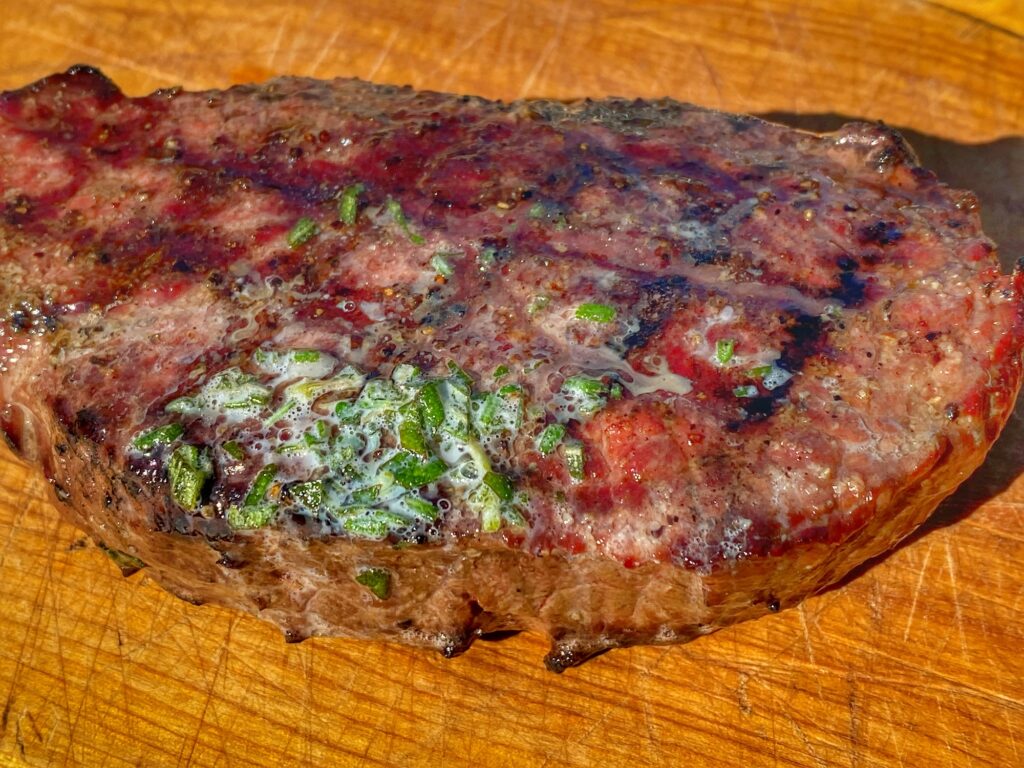
No wild game feast is complete without the proper seasoning. Brad Fenson Photo
No wild game feast is complete without the proper seasoning. The Bearded Butcher Blend lineup has become a favorite for bringing out the natural flavors without overpowering them. From Original and Cajun to Chipotle and Hollywood, there’s a blend for every mood. Their four-pack sets come with a bottle of BBQ or Rebel Red sauce, perfect for experimenting or gifting to a fellow grill fanatic. Every shake and sizzle adds another layer of character to the meal. Hi Mountain Seasonings are made to pair with wild game and are an excellent choice for enhancing flavors.
At the end of the day, grilling wild game is about respect for the animal, the process, and the people you share it with. Each step, from field care to the final sear, tells a story. You can taste the effort in every bite: the sharp edge of a well-used knife, the patience of a slow thaw, the quick flick of a brush dripping with butter. When you do it right, that first whiff off the grill has a way of stopping conversation. Someone will inevitably say, “What’s cooking?” And that’s when you know you’ve nailed it—when the aroma alone draws them in before the first bite ever hits the plate.
February 25, 2026 •iSportsman Staff